Temple of Aesculapius, Neoclassical temple in Villa Borghese gardens, Italy.
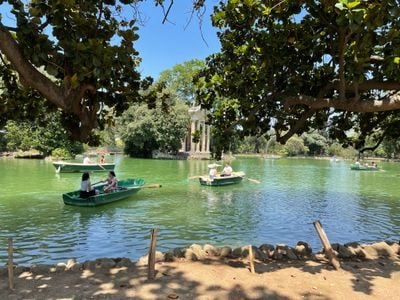
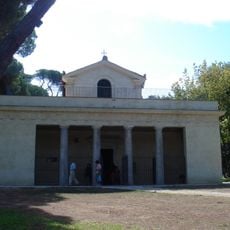
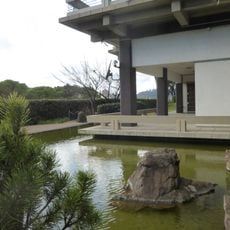
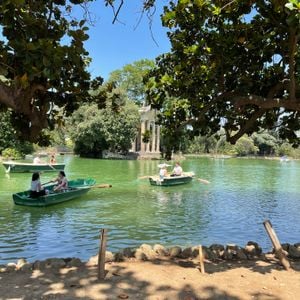
The Temple of Aesculapius is a small Neoclassical Ionic temple on an artificial island in the lake of Villa Borghese gardens, Rome. Four columns stand before the cella, carrying a frieze inscribed in Greek "Ἀσκληπίῳ Σωτήρι", dedicated to Aesculapius the Saviour, and a triangular pediment with a stucco relief of the god's arrival in Rome. Statues stand on the roof, and the statue of Aesculapius sits in a niche behind the portico.
The temple was built between 1785 and 1792 by Antonio Asprucci with his son Mario and the painter Cristoforo Unterperger. The original plan was only an architectural facade to hold the statue of Aesculapius, unearthed at the ruins of the Mausoleum of Augustus; the small isolated temple was decided on later. The statue had been restored by Vincenzo Pacetti and sold to Marcantonio Borghese IV in 1785.
The temple is dedicated to Aesculapius, the god of medicine. A Greek inscription on the trabeation between the Ionic columns and the pediment reads «Ἀσκληπίῳ Σωτήρι», to Aesculapius the Saviour. The pediment's stucco relief shows the god's arrival in Rome, and the statue of Aesculapius stands in a small shrine behind the portico.
Access to the island involves crossing a wooden bridge equipped with steel railings from the mainland. Note that public entry to the island is frequently restricted, so check current access conditions before your visit.
The temple was first planned as a single architectural facade to display the statue of Aesculapius, unearthed among the ruins of the Mausoleum of Augustus. Only later did the builders decide to erect a small free-standing temple on the artificial island. The statue had been restored by Vincenzo Pacetti and sold to Marcantonio Borghese IV in 1785.
The community of curious travelers
AroundUs brings together thousands of curated places, local tips, and hidden gems, enriched daily by 93,132 contributors worldwide.