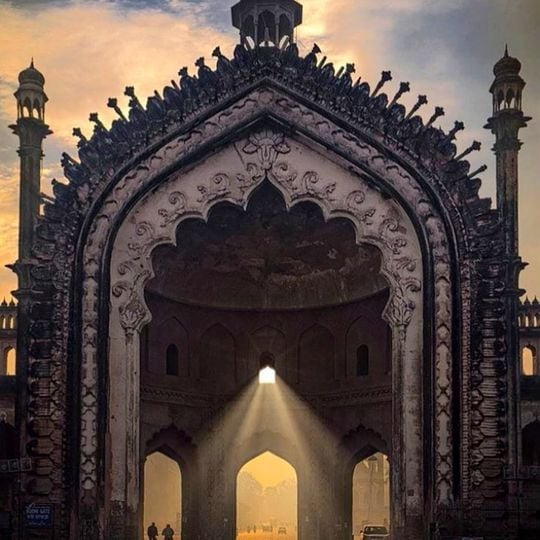
Rumi Gate
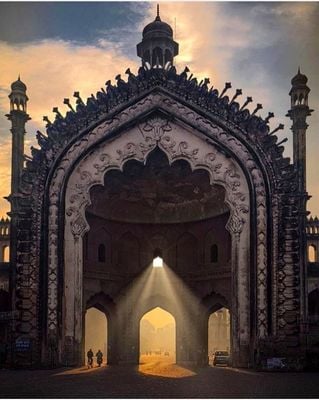
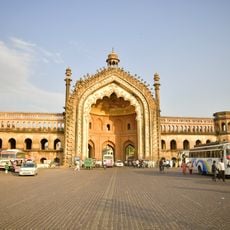
Rumi Gate is a large city gateway in Lucknow built in the late 1700s and positioned at the entrance to the old city section. Rising approximately 60 feet with a distinctive arched opening topped by a half-spherical dome, it features intricate flower carvings throughout and was constructed from thin bricks and lime mortar, inspired by architectural styles from Istanbul.
The gate was built in 1784 by Nawab Asaf-ud-Daula as an entrance to the city during a period when he sought to establish Lucknow as a significant urban center. The structure was modeled after the renowned city gate in Istanbul and served as the original boundary marker of the old city, standing as a symbol of the Nawab's vision for an artistically accomplished region.
The name Rumi Gate refers to historical links with the Ottoman Empire, reflecting the exchange of architectural ideas between regions. The ornate flower carvings and detailed patterns on its surfaces show the artistic values of the Nawab's court and continue to draw people interested in the craftsmanship of that era.
The gate is easily accessible and located near other historic sites and busy markets in central Lucknow. Wear comfortable shoes as the surrounding area is lively and crowded, and visit during daytime to clearly see the carvings and architectural details on the structure.
The gate originally featured water fountains shooting from its flower carvings, and a large lantern hung from the octagonal dome atop it at night. These decorative elements have since faded, leaving only traces of the splendor the Nawab once created for his city.
The community of curious travelers
AroundUs brings together thousands of curated places, local tips, and hidden gems, enriched daily by 60,000 contributors worldwide.