Chhota Imambara, Shia congregation hall and mausoleum in Lucknow, India
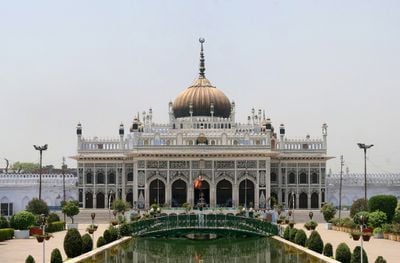
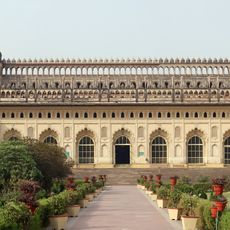
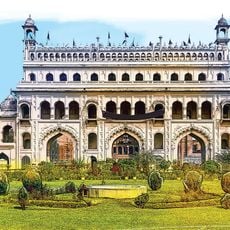
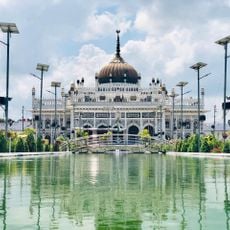
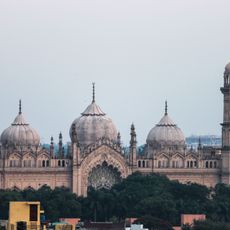
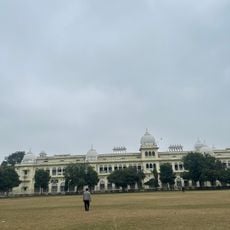
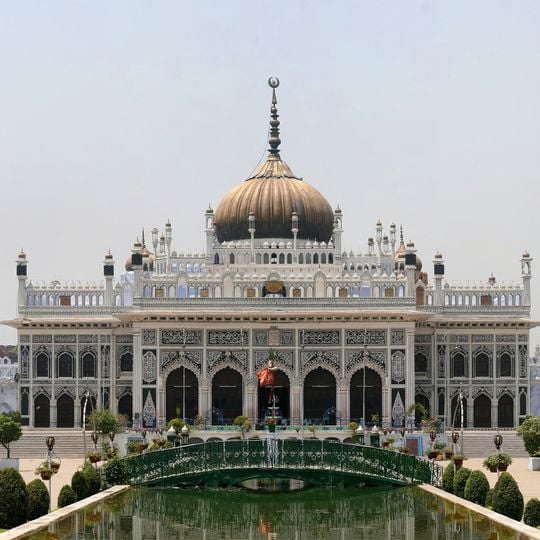
Chhota Imambara, also called Imambara Hussainabad Mubarak, is a congregation hall and mausoleum built in 1838 by Nawab Muhammad Ali Shah. Its white facade has three sections of pointed arches framed by latticework, a ribbed bronze-colored dome with a tiered finial, and small minaret-like towers with cupolas along the roofline. Inside are two halls, a Shehnasheen platform for a zarih replica, and walls decorated with Arabic calligraphy.
The third Nawab of Awadh built this structure in 1838 as both a prayer hall and his future tomb. The project reflected the ruler's power and religious devotion during that period.
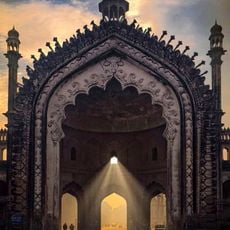
The building's five main doorways honour the Panjetan, the five holy figures of Shia Islam. Inside, the Azakhana hall holds a Shehnasheen platform where a zarih, a replica of the grill over Imam Husain's grave at Karbala, is kept. During Muharram the hall's chandeliers and crystal lamps are lit, which earned it the name Palace of Lights.
The site has separate prayer areas for men and women, with certain religious sections off-limits to non-Muslim visitors. It is helpful to check access rules beforehand and wear appropriate clothing when visiting.
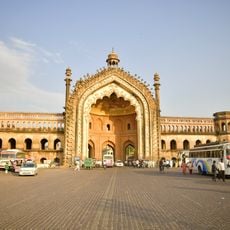
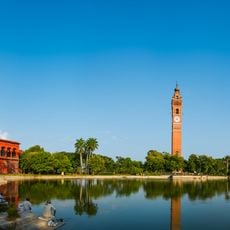
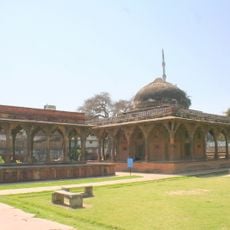
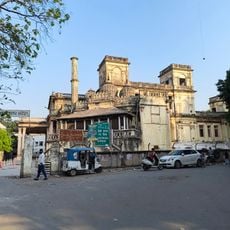
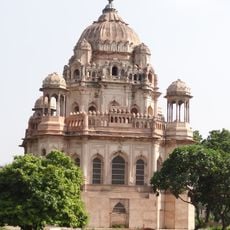
The Satkhanda watchtower was meant to have seven storeys, but work stopped at the fourth after Nawab Muhammad Ali Shah died in 1842; French sources say he wanted it modelled on the Qutb Minar and the Leaning Tower of Pisa. Nearby stand two small-scale copies of the Taj Mahal, the tombs of his daughter Asiya Begum and her husband.
The community of curious travelers
AroundUs brings together thousands of curated places, local tips, and hidden gems, enriched daily by 94,405 contributors worldwide.