Oškobrh, Mountain summit near Poděbrady, Czech Republic
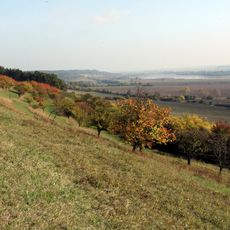
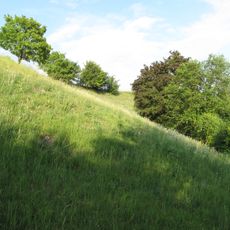
Oškobrh is a low, broad hill with a double summit rising to 287 m above the Elbe plain, 8 km east of Poděbrady. Its slopes are wooded with oak, spruce, hornbeam, ash and pine, and most of the hill is a muflon breeding enclosure that is not open to the public. The summit plateau is ringed by earthen ramparts and quarried opuka outcrops.
The double-peaked hill was settled in the Hallstatt and La Tène periods; a rampart and ditches of a Lusatian culture hillfort survive on the summit, investigated in 1974. A village on the hill, first recorded in 1352 and confirmed to the Hradiště Cistercian monastery, was probably destroyed in the Hussite wars. Three small churches stood on the northern summit, the oldest from the 13th century; a Baroque church built in 1736 was demolished in 1786.
The name Oškobrh is explained in local legends: carters shouted "Vozko, brzď!" ("Cart, brake!") while climbing, giving Voškobrh, or the servant Ošek of Prince Slavník found a lost son in a cave here. Scholars instead trace the name to a pre-Slavic, likely Germanic form meaning "ash hill".
The hill can be reached on foot from Poděbrady and the paths are generally easy to walk, especially in dry conditions. Wearing proper footwear and bringing water along the way is advisable.
The name Oškobrh probably comes from a pre-Slavic Germanic form meaning "ash hill", one of the few such place names in Bohemia. A local legend instead credits the drivers who shouted "Vozko, brzď!" while hauling carts up the slope.
The community of curious travelers
AroundUs brings together thousands of curated places, local tips, and hidden gems, enriched daily by 92,141 contributors worldwide.