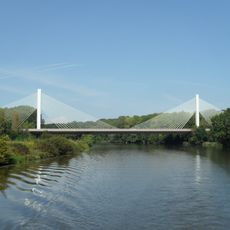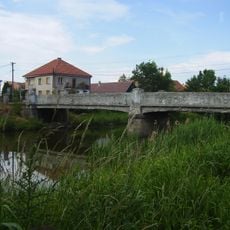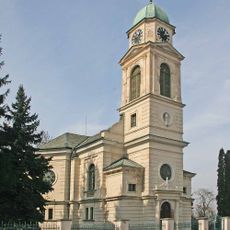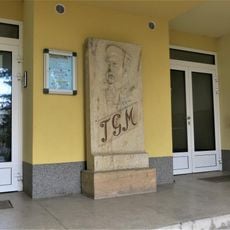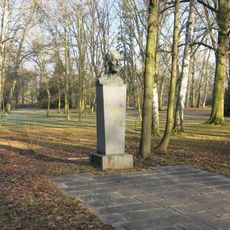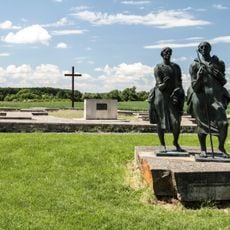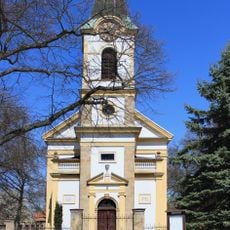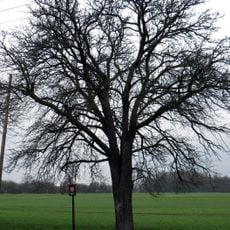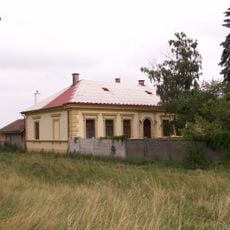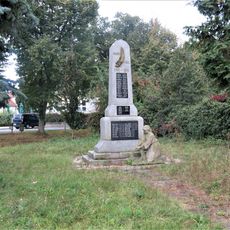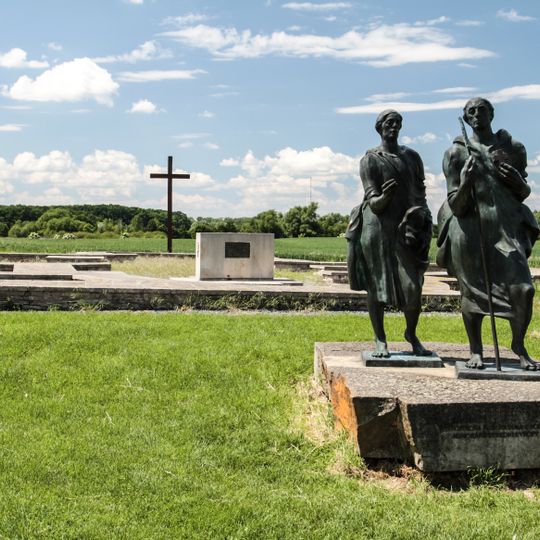
Libice nad Cidlinou, Archaeological site in Libice nad Cidlinou, Czech Republic.
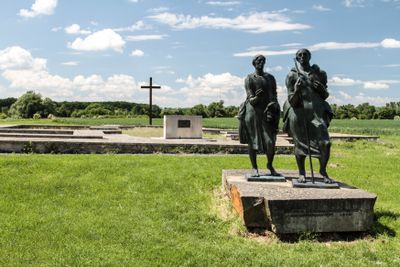
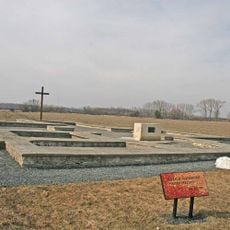
Libice nad Cidlinou is an archaeological site on a sand and gravel terrace next to the Cidlina River and its floodplain. Excavations have uncovered the foundations of a medieval church, a ducal palace, and hundreds of graves that map out the inner fortress area.
A fortified hillfort arose at the start of the 9th century near the Elbe and Cidlina confluence, and the site was settled by Slavs earlier still. In the mid-10th century a church and palace were built on the acropolis, linked to the Slavníks, whose coins bore the inscription LUIBUZ in the 970s and 980s. On St Wenceslas's feast day in 995, a Přemyslid force attacked and killed most of the family; the hillfort then served as a Přemyslid administrative centre until 1130.
This location served as a major center of early Czech authority and reveals how people lived and governed here during the 10th century. The building foundations and numerous graves tell the story of a prosperous and organized community under the Slavník family's rule.
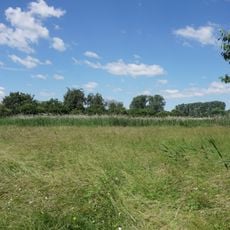
The acropolis lies west of Libice nad Cidlinou at a spot called Na Hradě, with the forecourt built over by the village core. The line of the rampart survives only in a short stretch near the path up to the acropolis. The church and palace ground plans are marked out on the ground, and the former gate site is sketched in the terrain.
The place name appears on 10th-century coins minted at the stronghold in the 970s and 980s, inscribed as LUIBUZ. This is the earliest written form of the name Libice, and it shows that the site ran its own mint under the Slavník family.
The community of curious travelers
AroundUs brings together thousands of curated places, local tips, and hidden gems, enriched daily by 92,773 contributors worldwide.