Museum of Applied Arts, Museum of applied arts in Brno-město, Czech Republic.
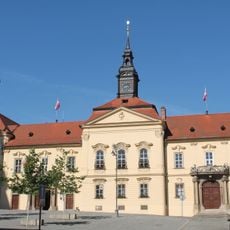
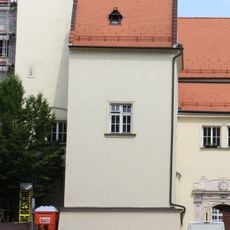
The Museum of Applied Arts occupies a Neo-Renaissance building on Husova třída, designed by the museum's own director Johann G. Schön and opened in 1883. Architect August Prokop doubled its volume five years later, creating large exhibition halls, a library and a drawing room. Since 1961 it has been part of the Moravian Gallery in Brno.
The museum was founded on 10 November 1873 as the Moravian Industrial Museum, a foundation backed by Moravian industrialists and the Brno Chamber of Commerce and Industry. Its first exhibition drew on objects from the 1873 Vienna World's Fair. The purpose-built Neo-Renaissance building on the ring road, designed by director Johann G. Schön, opened in 1883; August Prokop's rebuilding doubled its volume.
The museum's name changed in 1907 to Erzherzog-Reiner-Museum für Kunst und Gewerbe, reflecting a shift toward the artistic side of production; technical collections were dropped. From 1924 the Czech School of Arts and Crafts (ŠUŘ) operated inside the building, its studios initially in the museum itself.
The museum occupies a Neo-Renaissance building on Husova třída, on Brno's former ring road, opened in 1883 and doubled in size after August Prokop's rebuilding. Its library with reading room and drawing school were part of the original design. Since 1961 it has been part of the Moravian Gallery in Brno.
The museum ranks among the ten oldest applied arts museums in the world. In 1913 it became the central association museum of the Austro-Hungarian monarchy, and its director Julius Leisching led it for three decades from 1893.
The community of curious travelers
AroundUs brings together thousands of curated places, local tips, and hidden gems, enriched daily by 94,352 contributors worldwide.