Mionší forest, National nature reserve in Dolní Lomná, Czech Republic
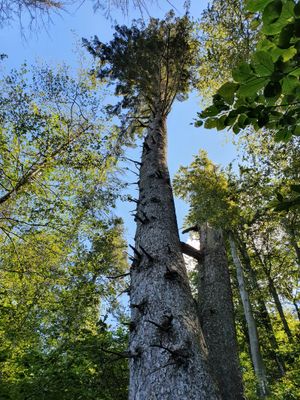
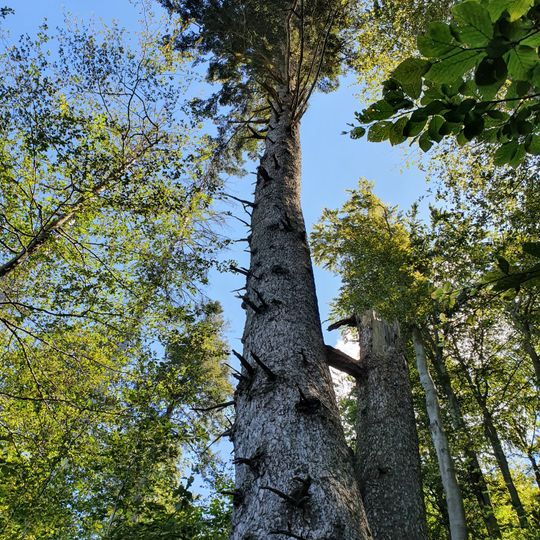
Mionší forest is a protected woodland in the northeast of the Czech Republic, set on a ridge near the villages of Horní Lomná and Úplaz. It extends over rolling ground with tall fir and beech trunks rising toward a thick roof of leaves, while streams and open fields border the woods.
The area was first granted legal protection in 1933, and since 1954 it has functioned as the Mionší national nature reserve. The old-growth fir and beech stand, with firs reaching 45–60 m and ages of 250–450 years, survived while surrounding slopes were cleared for farming and settlement.
Access to the reserve is only through a paid guided walk on an educational trail opened in 2005, starting north of the forest on the bank of the Lomná river; entry is limited to weekends from 1 June to 15 September, at 9:30 and 13:00. The forest has long drawn photographers: Rudolf Janda first brought Mionší to public attention in the 1930s, and Josef Sudek, Herbert Thiel and Petr Helbich later photographed it.
The reserve itself is closed to the public; the only access is an unmarked educational trail along its north-western edge, starting at the Matyščina louka information centre in Dolní Lomná. Entry to this trail is paid and possible only with a guide, from 1 June to 15 September, on weekends at 9:30 and 13:00.
In 1961 a fruiting body of the tinder fungus Ganoderma applanatum measuring 180 × 80 × 60 cm and weighing 96 kg was found here, the largest recorded; it is kept as an exhibit in the Silesian Museum in Opava.
The community of curious travelers
AroundUs brings together thousands of curated places, local tips, and hidden gems, enriched daily by 92,744 contributors worldwide.