Kopistská výsypka, Natural monument in Most, Czech Republic.
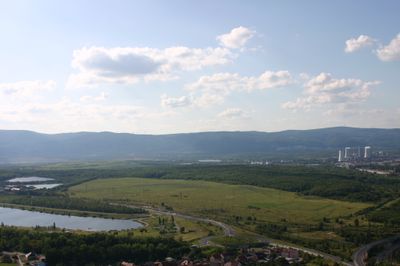
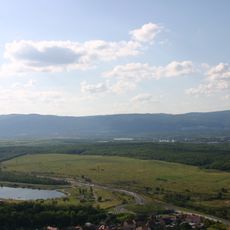
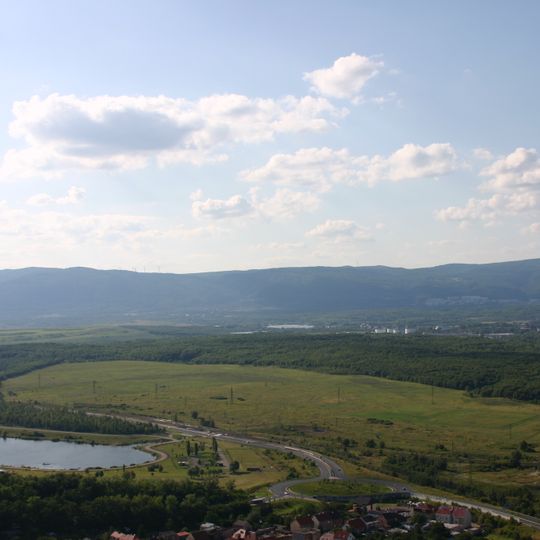
Kopistská výsypka is a protected natural site between Most and Litvínov spanning roughly 327 hectares with elevations ranging from 232 to 280 meters. The artificially channeled Bílina River borders the area on its western, northern, and eastern sides, creating a natural boundary.
Between 1945 and 1976, the land shifted from agricultural use and small mining shafts into a dump site receiving materials from the Obránců míru surface mine. This transition shaped the landscape and eventually led to its current protected status.
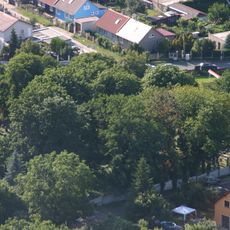
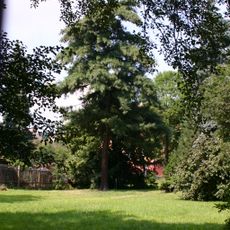
The name recalls the village of Kopisty, which lay about 2 km east and vanished; the heap lies on cadastral land of other extinct villages, Dolní Jiřetín, Souš and Třebušice. The site is also called the largest wild area in the Most region, and its forest, sown 1962–1969, is the largest in the Most Basin.
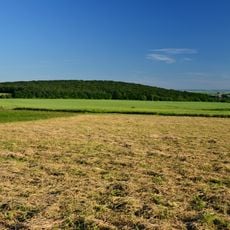
The site lies between Most and Litvínov, bounded by the Bílina river channel and the Mostecký transport corridor; the 3 km long, 50 m wide heat pipeline corridor cuts through the forest and is kept free of vegetation. The terrain is a reclaimed spoil heap with elevations of 232–280 m, so expect uneven ground and waterlogged depressions.
The largest forest in the Most Basin grew here from 1.23 million tree seedlings and about half a million shrubs planted between 1962 and 1969 on 295 hectares. The site also holds one of the largest populations of the great crested newt in the Ústí nad Labem Region.
The community of curious travelers
AroundUs brings together thousands of curated places, local tips, and hidden gems, enriched daily by 92,118 contributors worldwide.