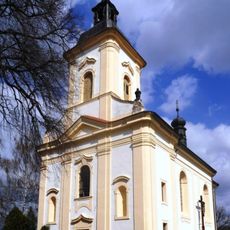
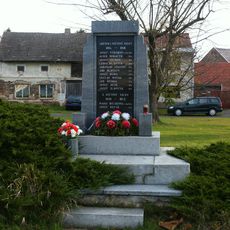
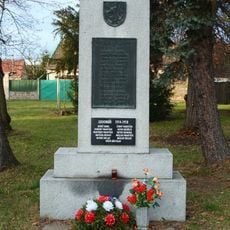
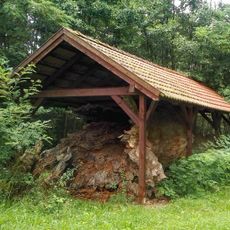
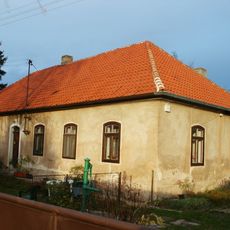
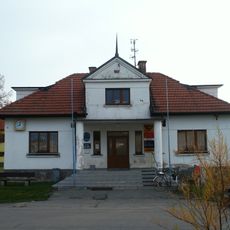
Libický luh, Nature reserve in Oseček, Czech Republic.
Libický luh is the largest continuous stretch of floodplain forest in the Czech Republic, covering 444 ha at the confluence of the Cidlina and Elbe rivers. The reserve is mostly hardwood floodplain forest, with numerous pools and old river channels, and it floods in spring.
The first settlements shaping the area date from the 6th century, and in the 9th and 10th centuries it lay near the Slavník castle at Libice nad Cidlinou. A document from 1743 records roughly 490 ha of forest, and military maps of 1764–1768 name it Libitzer Au. In 1819 a canal cut off the Pňovský luh, starting Elbe regulation.
The reserve lies beside the former Slavník hillfort of Libice nad Cidlinou, which it sheltered; the name Libický luh refers to this forest by Libice. A red-marked hiking trail crosses the area, and information boards stand along it. The orchid Epipactis albensis was first described here in 1973.
The site is accessible by car from Prague via highway exit at Velký Osek and has marked walking trails throughout the reserve. Visitors can also reach the area by train to a nearby station and explore the paths from there.
In 1901 the botanist Theodor Novák, son of the writer Tereza Nováková, drowned in the southern of two small pools south of the Bajkal pool while surveying the reserve's plants. The orchid Epipactis albensis was described here in 1973, and the critically endangered tadpole shrimp Lepidurus apus lives in pools that dry out periodically.
The community of curious travelers
AroundUs brings together thousands of curated places, local tips, and hidden gems, enriched daily by 92,267 contributors worldwide.