Rudrův mlýn, Watermill in Ratibořice, Czech Republic
Rudrův mlýn is a watermill in Ratibořice built with traditional stone construction across two floors, housing original milling machinery and equipment throughout its spaces. The building displays the mechanical systems and tools that were used to grind grain during its working years.
The mill stood on this site by the 16th century; its first known miller was Josef Hejna. In 1773 miller Antonín Ruder, who acquired the mill through marriage, rebuilt it at his own expense. His son sold it in 1842 to Jiří Vilém, Prince of Schaumburg-Lippe, owner of the Náchod estate, and an Empire-style building (no. 11) was then added as a mandl, a linen-smoothing works in use until 1949.
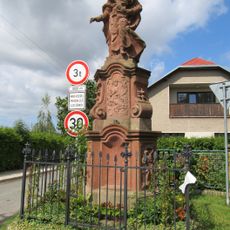
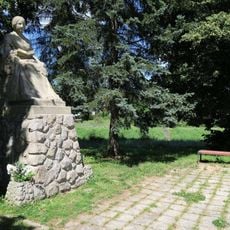
Miller Antonín Ruder, who rebuilt the mill in 1773, was the grandfather of Mančinka, a character in Božena Němcová's 'Babička'; his son appears in the novel as the good-natured father. The weir from which the millrace leads to the mill is called Viktorčin splav in the book. A baroque statue of the Virgin Mary, commissioned by Antonín Ruder and his wife, stands in the avenue in front of the mill.
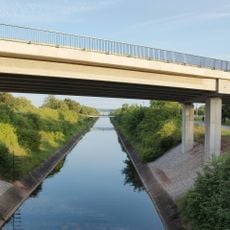
The mill stands north of the Ratibořice chateau in the Babiččino údolí, on the Úpa river; the water was led to the wheels by a millrace from the weir at Staré bělidlo, where the weir keeper regulated the flow. The one-storey stone building holds the mill room on the ground floor and the former miller's flat and šalanda upstairs, so expect stairs and uneven surfaces. Two water wheels were working in 2013, the third decaying; one wheel was moved here from Kolískův mlýn during reconstruction.
The site preserves a separate water-powered building used for pressing and smoothing heavy linens and fabrics, a secondary operation alongside milling. This adjoining structure reveals how water power served multiple craft purposes in rural communities.
The community of curious travelers
AroundUs brings together thousands of curated places, local tips, and hidden gems, enriched daily by 92,576 contributors worldwide.