Punchbowl Formation, Sandstone formation in Los Angeles County, California.
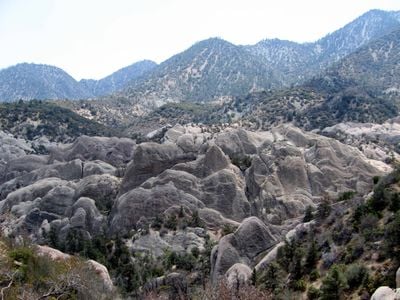
Punchbowl Formation is a sandstone and conglomerate formation found in the northern San Gabriel Mountains, with layers of different rock types stacked on top of each other. These deposits reveal the complex geological processes that shaped the region over millions of years.
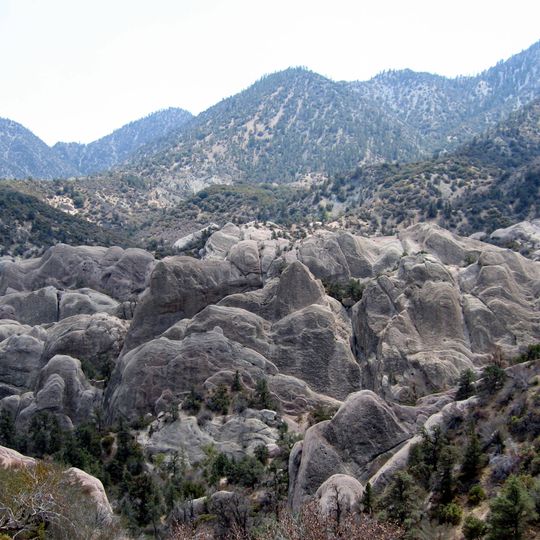
The Punchbowl Formation accumulated during the middle to late Miocene, roughly 5 to 10 million years ago, as fluvial and alluvial conglomerates, sandstones and minor mudstones. Movement along the Punchbowl Fault, close to the San Andreas Fault to the north, folded and uplifted the beds; the Devil's Punchbowl is a large plunging syncline where the edges were folded upward and the centre dipped.
The formation's fossil beds have yielded mammals from the Neogene, roughly 5 to 10 million years old, including rodents such as Petauristodon sp. and undetermined squirrels, plus turtles like Gopherus depressus. Visitors to the Devil's Punchbowl see the folded sandstone walls of the gorge, where three faults have tilted and lifted the beds.
The formation is exposed in the walls of the Devil's Punchbowl gorge, inside the Devil's Punchbowl Natural Area, a Los Angeles County park within Angeles National Forest. Trails from the park lead to viewpoints of the folded sandstone. The Devil's Punchbowl drainage flows into Sandrock Creek, a tributary of Big Rock Creek that disappears into the Mojave Desert.
The rock layers contain fossil remains of animals that lived in this region millions of years ago, including extinct camel species and other mammals. These fossils provide researchers with clues about ancient life and the environment of that distant time.
The community of curious travelers
AroundUs brings together thousands of curated places, local tips, and hidden gems, enriched daily by 93,558 contributors worldwide.