Finnish Folk Art Museum, Art museum in the United States
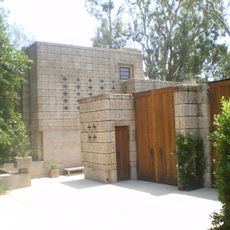
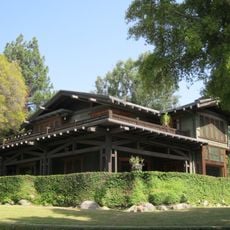
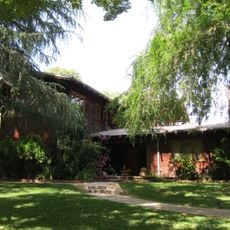
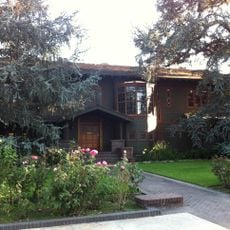
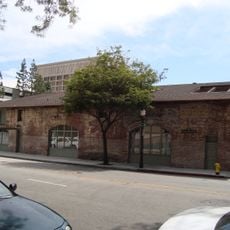
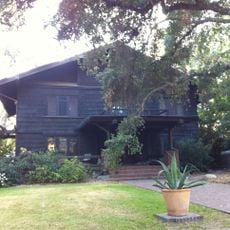
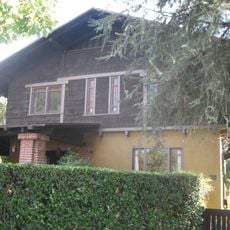
The Finnish Folk Art Museum occupies a redwood Swiss chalet-style building with a stone roof, built in 1910 by architect Frederick Roehrig as a garage for Arthur Fleming's Wigmore Estate and moved to the Fenyes Estate grounds in 1949. Its main room, the Tupa, holds early 19th-century Finnish peasant furniture, an open hearth called a Takka, and Leipävartaat racks for storing rye sourdough bread.
The Swiss chalet-style building was constructed in 1910 by architect Frederick Roehrig as a garage for Arthur Fleming's Wigmore Estate. In 1949 Yrjö Alfred Paloheimo, Finland's consular officer for Southern California, Arizona and New Mexico, bought the structure and moved it to the Fenyes Estate grounds. It served as guest house and sauna before the Finnish Folk Art Museum and Finlandia Gardens were dedicated in 1974.
The main room is called a "Tupa", the Finnish word for a farmhouse living room. It holds early 19th-century Finnish peasant furniture and objects collected by Yrjö Alfred Paloheimo from several Finnish provinces. Among the pieces are "Tuoli" chairs hand-carved by farmers as bridal gifts for their daughters, and "Leipävartaat", poles and overhead racks for storing rye sourdough bread.
The museum is located on Walnut Street and is typically open for visits on certain days around noon, with tours lasting about half an hour. Docents from the Pasadena Museum of History guide visitors through the space and explain the artifacts and building history.
The building was moved to the Fenyes Estate in 1949 and served as a folk art museum, guest house and sauna. Its buyer was Yrjö Alfred Paloheimo, a Finnish-born consular officer for Southern California, Arizona and New Mexico, who founded the Finlandia Foundation and did much of the stone work and gardening himself.
The community of curious travelers
AroundUs brings together thousands of curated places, local tips, and hidden gems, enriched daily by 93,488 contributors worldwide.