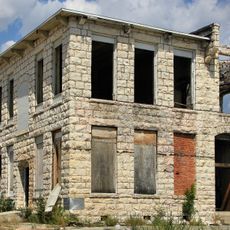
Col. Elijah Sterling Clack Robertson Plantation, Greek Revival plantation house in Salado, United States
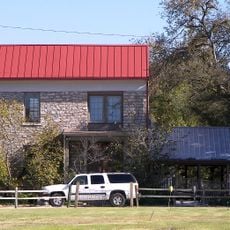
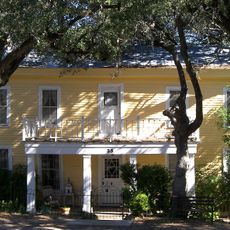
The Col. Elijah Sterling Clack Robertson Plantation in Salado, Texas, is a Greek Revival house whose main structure Robertson completed in 1860. He brought the metal roof from Houston, and the kitchen, stable and quarters for the people he enslaved were built of local limestone. The National Register of Historic Places listed the plantation on April 5, 1983.
Elijah Sterling Clack Robertson built the main house in the late 1850s and finished it in 1860, using local limestone for the kitchen, stable and quarters for the people he enslaved, and hauling the metal roof from Houston. The Historic American Buildings Survey listed the plantation in 1936, when it received a Texas Centennial Marker. It became a Recorded Texas Historic Landmark in 1967 and joined the National Register of Historic Places on April 5, 1983.
The main house layout reflects the social divisions of the era, with separate spaces for family and staff that visitors can observe today. The cemetery on the grounds reveals how generations of the family marked their presence and continuity in this region.
The property sits just west of Interstate 35, about a quarter mile southwest of Salado's downtown area on South Robertson Road. Its position on the edge of town gives a sense of how the plantation originally sat outside the developing settlement.
The metal roof was shipped from Houston, while the kitchen, stable and quarters for the people Robertson enslaved were built of local limestone. In 1936 the Historic American Buildings Survey listed the plantation and it received a Texas Centennial Marker; in 1967 it became a Texas Historic Landmark.
The community of curious travelers
AroundUs brings together thousands of curated places, local tips, and hidden gems, enriched daily by 93,323 contributors worldwide.