Fort Gansevoort, Military fort in Manhattan, United States
Fort Gansevoort was a U.S. Army fort between Gansevoort Street and West 12th Street in Manhattan, built to defend the Hudson River. Completed in 1812, it mounted 22 guns and included a shot furnace, magazine, arsenal, and barracks. Its whitewashed exterior earned it the name White Fort.
Fort Gansevoort was completed in 1812, shortly after the outbreak of the War of 1812, and was part of what was later called the second system of US fortifications. Some sources place the start of construction in 1808, though the fort does not appear in the Secretary of War's report on fortifications for December 1811. It saw no action, as New York City was not attacked in that war, and was demolished in either 1849 or 1854, with references varying.
The name honors General Peter Gansevoort, a Revolutionary War officer who played a role in defending this part of New York. Walking through the area today, you can sense the connection to early American military history in the local street names.
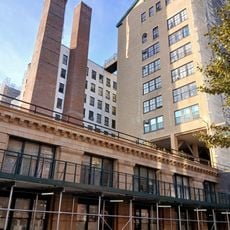
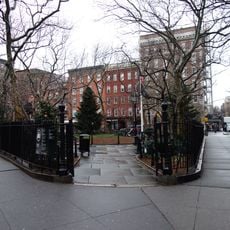
The fort stood near the west end of Gansevoort Street, between Gansevoort Street and West 12th Street, a short walk from the Hudson River. North Battery, its supporting work, was built on landfill in the river and joined to Manhattan by a bridge at Canal Street. Nothing of the fort remains, so look for the street grid rather than ruins.
Fort Gansevoort stood on the site of an earlier weapons development centre, where George Bomford developed the first columbiad cannon. The fort itself, finished in 1812 and known as the White Fort for its whitewashed exterior, never saw action and was demolished in 1849 or 1854.
The community of curious travelers
AroundUs brings together thousands of curated places, local tips, and hidden gems, enriched daily by 92,742 contributors worldwide.