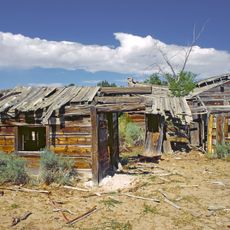
Frisco Charcoal Kilns, Historic charcoal production facility in Frisco, Utah, US.
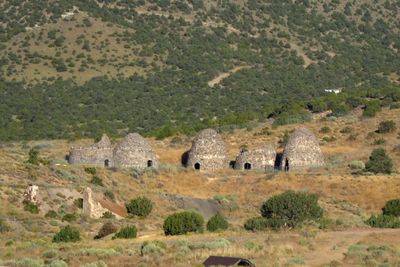
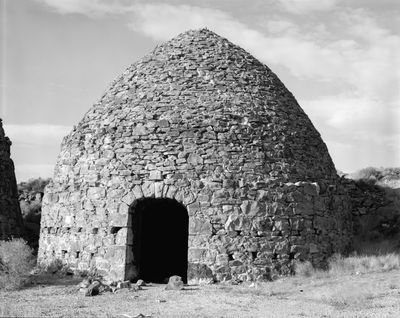
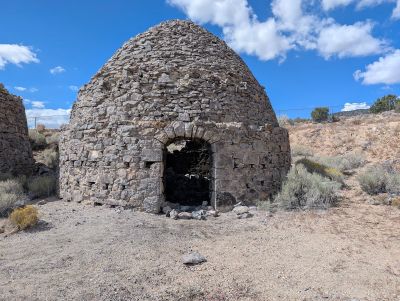
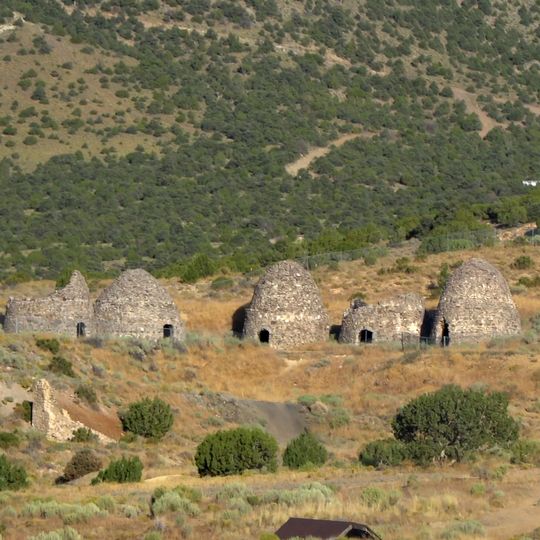
Frisco Charcoal Kilns are stone production structures featuring dome-shaped ovens built to convert wood into charcoal for silver ore processing. The facility consists of several large chambers arranged in a practical layout that remains visible today.
The San Francisco Mining District was created on August 12, 1871, in Beaver County, and the Horn Silver Mine opened in 1875, drawing the town of Frisco around it. The Frisco Mining and Smelting Company built five granite charcoal kilns between 1877 and 1880 under Benjamin Y. Hampton, mainly for that mine, at $500 to $1,000 each. After the mine's February 12, 1885 cave-in, workers drifted away and the company closed in 1884.
The kilns reveal how mining and fuel production were deeply connected in this region and the labor required to keep silver extraction running. Visitors walk among structures that show how an entire industry shaped daily life in this remote area.
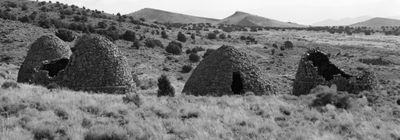
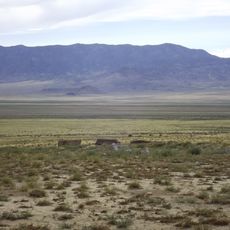
The five kilns stand in a line on open ground off a dirt road from the Frisco cemetery area, with no shade and no facilities; carry water and wear sturdy shoes for loose rock. The rightmost kiln and the fifth from the left have dark openings at the base, so bring a torch to look inside. Ground is uneven and unmarked, so watch your footing near the ruins.
The five surviving kilns were built between 1877 and 1880 by the Frisco Mining and Smelting Company under Benjamin Y. Hampton, mainly for the Horn Silver Mine, at $500 to $1,000 each. They vary from 16 to 32 feet in diameter, so no two are the same size.
The community of curious travelers
AroundUs brings together thousands of curated places, local tips, and hidden gems, enriched daily by 92,631 contributors worldwide.