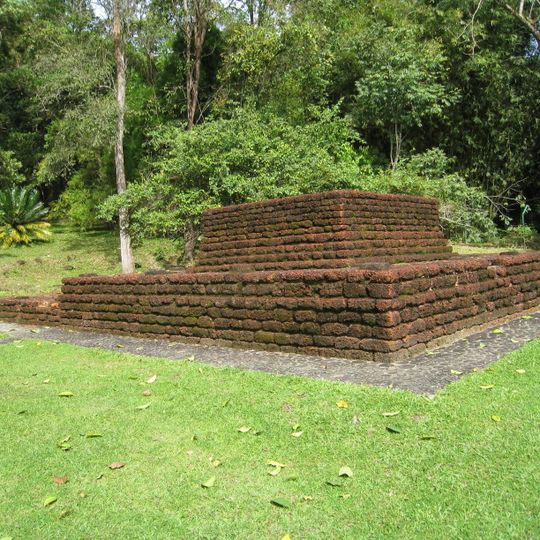
Bujang Valley, Archaeological site in Kedah, Malaysia.
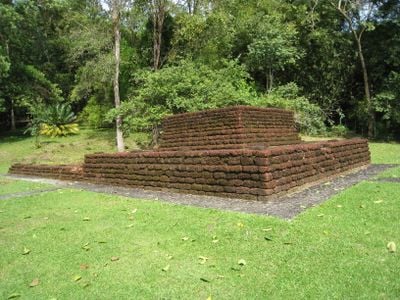
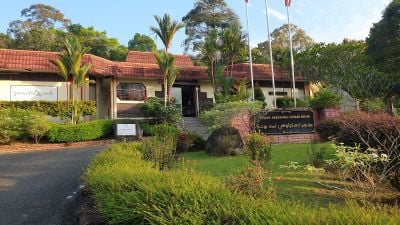
Bujang Valley is an archaeological site near Merbok in Kedah state, spreading across a wide area with temple ruins, tools, and other traces of early settlement. The finds are gathered in a museum that gives an overview of the different objects made from stone, metal, and ceramic.
The Bujang Valley was an Indianised Hindu-Buddhist complex active from the 5th to the 14th century CE. Excavations at Sungai Batu revealed jetty remains, iron-smelting sites and a clay brick monument dated to 110 AD, the oldest man-made structure recorded in Southeast Asia. In 2013 the 1,200-year-old Candi No. 11 was demolished by a land developer, prompting calls to gazette the valley as a heritage site.
The name Bujang is often linked to the Malay word for bachelor, but researchers from Universiti Sains Malaysia relate it to the Sanskrit bhujangga, meaning serpent, after the winding Muda and Merbok rivers. Excavations have yielded thousands of ancient beads, and the valley is listed in the Malaysian Book of Records as one of the Indo-Pacific's bead-making sites.
The museum opens daily and displays finds from different excavations in the area. A visit can be combined with a walk to some of the temple ruins nearby, which are accessible by marked paths.
One part of the site contains a clay brick monument dated to the year 110, making it one of the oldest human constructions in Southeast Asia. This finding places the region in an early phase of settlement and building craft.
The community of curious travelers
AroundUs brings together thousands of curated places, local tips, and hidden gems, enriched daily by 93,458 contributors worldwide.