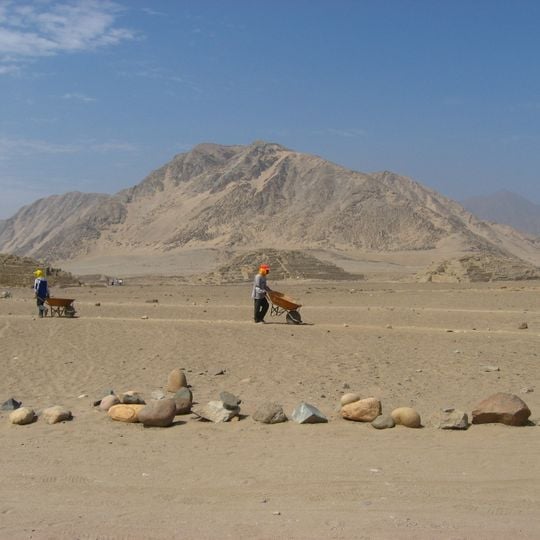
Caral, Archaeological site in Supe District, Barranca Province, Peru
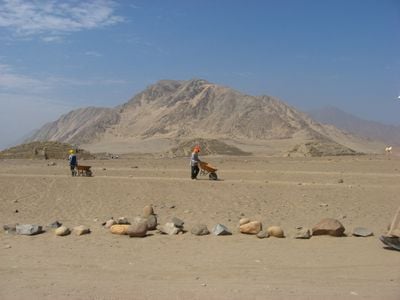
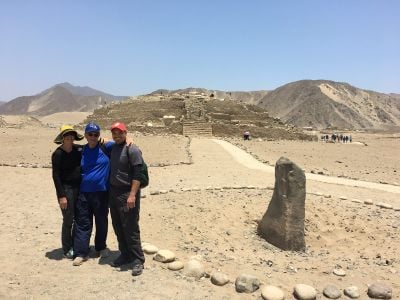
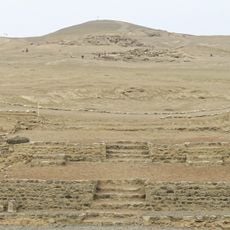
Caral is an archaeological site in the Supe Valley of Barranca Province, Peru, at 350 meters elevation. Its main temple complex measures 150 meters long, 110 meters wide and 28 meters high, and the site spreads over more than 60 hectares with plazas and residential buildings.
The settlement was founded around 2600 BC and is considered the oldest known urban center in the Americas. It developed at the same time as ancient civilizations in Egypt and Mesopotamia.
The name Caral appears in 17th-century idolatry records from Cajatambo and may be Quechua, though its meaning is disputed; some linguists propose "fiber" or "reed". Excavations found 32 flutes of condor and pelican bone and a knotted textile labelled a quipu, the oldest known. No weapons or battlements have been found at the site.
The site lies 182 kilometers (113 miles) north of Lima and can be reached through the city of Barranca, from where a route accessible throughout the year continues. Visitors should bring plenty of water and sun protection, as the grounds are extensive and shade is limited.
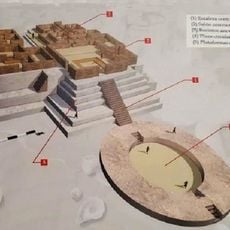
The layout divides into upper and lower sections and contains pyramidal structures with no evidence of military fortifications. This arrangement suggests the society placed its focus on trade and exchange rather than warfare.
The community of curious travelers
AroundUs brings together thousands of curated places, local tips, and hidden gems, enriched daily by 92,297 contributors worldwide.