Aspero, Archaeological site in Supe Puerto District, Peru
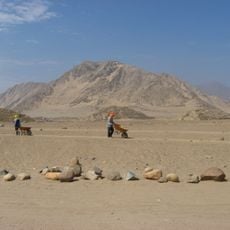
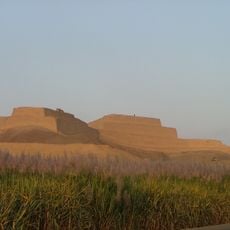
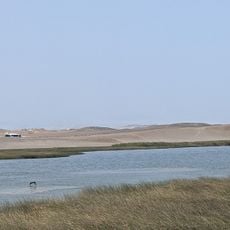
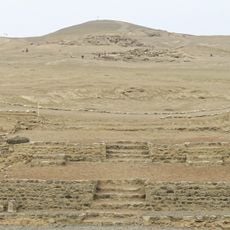
Aspero is an archaeological complex at the mouth of the Supe River, about 200 kilometers north of Lima. The site features several pyramidal structures, residential quarters, and underground storage facilities scattered across terrain that blends sandy hills, wetlands, and coastal access.
Settlement at this location dates back roughly 7000 years, when early inhabitants relied primarily on fishing and shellfish collection. This community was part of the earliest Andean civilization and maintained trade connections with groups living further inland in the Supe Valley.
Aspero's inhabitants fished, collected shellfish and hunted sea mammals, and the site's middens have yielded fish hooks, nets, clay figurines, wooden bowls, feathers and cotton. Excavations here led to the "Maritime Foundations of Andean culture" theory, later disputed by scholars citing inland irrigation agriculture. Aspero also traded with Caral, 25 km up-valley, whose bone flutes resemble eight found at Aspero.
Access is on foot: a 2 km dirt road runs southwest from Plazuela Grau through the Pérez de Cuellar housing estate to the site. The complex lies on the right bank of the Supe River, about 500 m from the Pacific, among sandy hills, wetlands and cultivated fields; the former central plaza is now a cultivation field and reed bed.
In 2016, eight transverse flutes made from animal bone were found in the Huaca de los Ídolos, resembling flutes from Caral and supporting the link between the two sites. The same huaca yielded the burial of a woman of about 40, placed around 2500 BC.
The community of curious travelers
AroundUs brings together thousands of curated places, local tips, and hidden gems, enriched daily by 92,571 contributors worldwide.