El Castillo de Huarmey, Archaeological site and mausoleum in Huarmey, Peru.
El Castillo de Huarmey is an archaeological site and royal mausoleum in the Ancash region of northern Peru that covers a large expanse of land. The structure contains multiple underground chambers within a pyramid formation, with spaces that served different purposes and once held thousands of objects.
El Castillo de Huarmey was a Wari administrative center during the Middle Horizon, in the 9th to 11th centuries AD, not around 750 AD. In 2012 and 2013 a Peruvian-Polish team led by Milosz Giersz and Roberto Pimentel Nita excavated a royal Wari tomb sealed beneath about 33 tons of stone fill, the first intact imperial Wari tomb found. It held 63 tombs with 1,200 objects, including gold and silver jewelry, bronze axes and silver bowls.
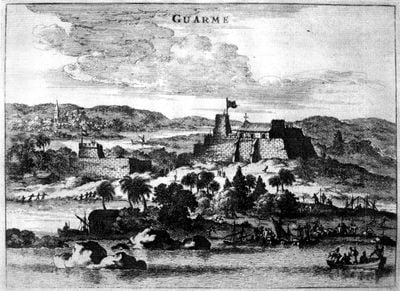
The name "Castillo" was given by European travellers, and a 1671 engraving by Arnoldus Montanus shows the pre-Inca structure drawn as a European castle in an invented forest. Excavations found that royal Wari bodies were repeatedly removed from the chambers, pointing to ancestor worship. The 2013 tomb held 1,200 objects, among them gold earrings, bronze axes, silver bowls and gold weaving tools.
Access to certain areas may be restricted depending on ongoing excavation work, so it helps to check current conditions before your visit. Most visitors benefit from a local guide to fully understand the structure and its significance.
The 2013 tomb held 1,200 objects, among them gold earrings, bronze axes, copper and silver jewelry and silver bowls. Three side chambers contained elite Wari women with gold weaving tools. Giersz found the royal bodies had been repeatedly removed from the chambers, likely for display during the Wari era, pointing to ancestor worship.
The community of curious travelers
AroundUs brings together thousands of curated places, local tips, and hidden gems, enriched daily by 93,446 contributors worldwide.