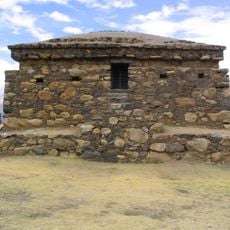
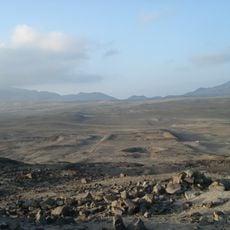
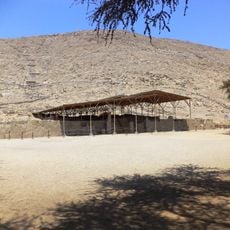
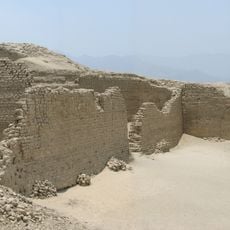
Manchan, Archaeological site in Ancash department, Peru.
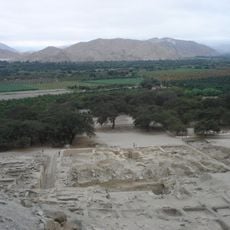
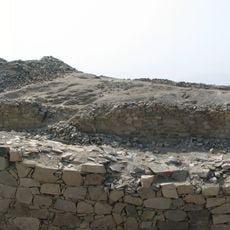
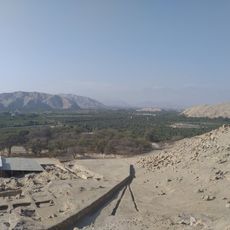
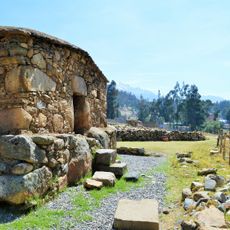
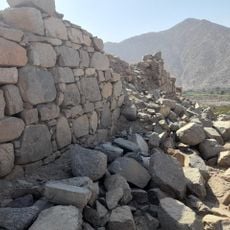
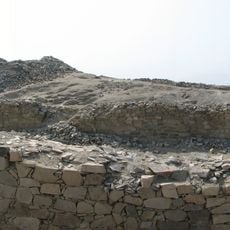
Manchan is an archaeological site of about 63 hectares on a sandy plain beside farmland in the Casma Valley, Ancash, 9.5 km from the ocean, split by the Pan-American Highway. Its visible remains date largely to around 1350 AD: clusters of adjoining rooms with walls along the north edge, and in the northwest five isolated adobe compounds with offset doorways, ramps and benches. Most residents lived in simple cane houses.
Manchan was the most important Chimú administrative center in the Casma Valley when the Inca conquered the region. Its visible remains date largely to the Late Intermediate period, around 1350 AD, and its ceramics and architecture interweave Chimú and Casma traditions. After annexation to the Inca Empire it was enlarged, and an Inca road heading south to Huarmey was built. A yupana found during rescue work in 2016 also comes from this period.
Manchan's ceramics and architecture interweave Chimú and Casma traditions, a mix visible in the site's adobe compounds. The name is also written Manchán. The Chimú made it their valley's main administrative center before the Inca conquest, and Casma-style pottery found here hints at an earlier Casma settlement on the same sandy plain.
Manchan lies on a sandy plain beside farmland in the Casma Valley, 9.5 km from the ocean, and the Pan-American Highway cuts through the middle of the site. Access the two halves from the roadside and watch for traffic when crossing. Ground is sandy and uneven, with little shade, so bring water and sun protection.
Manchan is split in two by the Pan-American Highway, which cuts straight through its adobe compounds. A yupana, an Inca counting board, was found during rescue work in 2016. The site also preserves a stretch of Inca road heading south toward Huarmey.
The community of curious travelers
AroundUs brings together thousands of curated places, local tips, and hidden gems, enriched daily by 92,654 contributors worldwide.