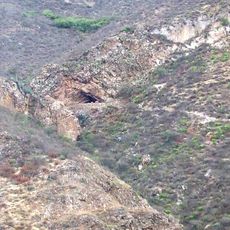
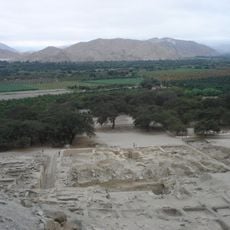
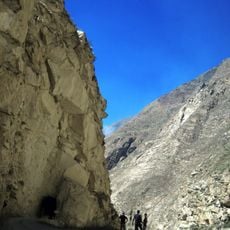
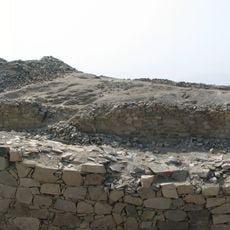
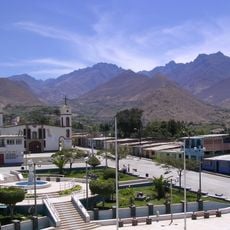
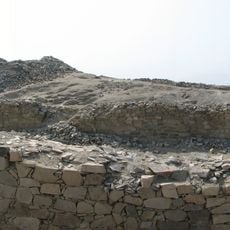
Pañamarka, Archaeological site in Ancash region, Peru.
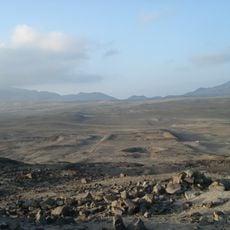
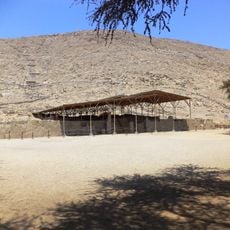
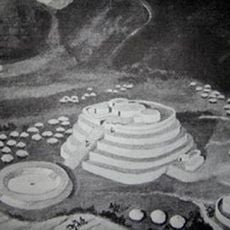
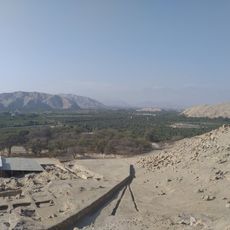
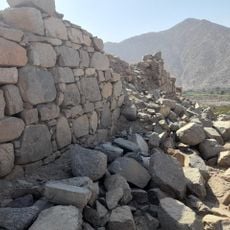
Pañamarca is a Moche archaeological site of adobe constructions on stepped hills above the right bank of the Nepeña River, in the Nepeña District of Peru's Ancash Region. Its walls were coated in clay plaster and painted with near life-size figures, battle scenes and mythological beings in flat mineral colours. Narrow steep stairways and five parallel causeways about 9.8 m wide run through the complex.
The structures date from 100 AD to 900 AD, reflecting strong Moche influence along Peru's northern coast. This period marks the rise and development of Moche settlement and power in the area.
The painted murals feature weapons, serpent motifs, and depictions of women that reveal the religious and political beliefs of Moche people. These artworks show what held meaning and power in their daily life and governance.
Visiting requires coordination with local authorities since ongoing excavation and research activities take place at the site. Check conditions beforehand and arrange your visit through the local community.
In 2024, excavations by Peruvian and American researchers uncovered a painted throne room linked to a female figure, possibly a queen or political leader, and a hall called the Hall of the Braided Serpents. The murals, dated around 500–900 CE, were modelled on images from portable objects such as ceramic vases and tapestries.
The community of curious travelers
AroundUs brings together thousands of curated places, local tips, and hidden gems, enriched daily by 94,671 contributors worldwide.