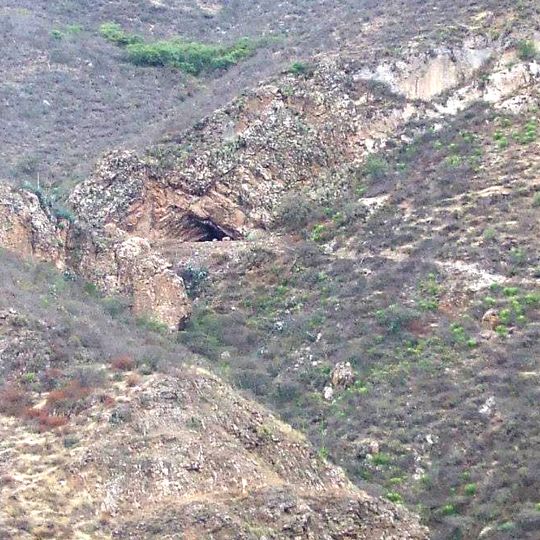
Guitarrero Cave, Archaeological cave site in Ancash, Peru
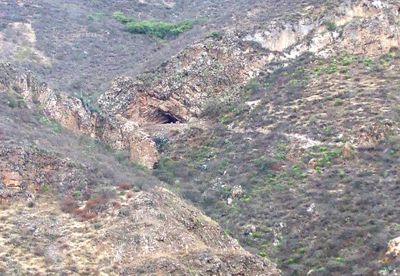
Guitarrero Cave opens eastward in the eastern slope of the Cordillera Negra, 150 m above the Santa River at 2,580 m elevation. Its entrance is an irregular arch in layered tan and gray rock, and the chamber extends about 100 m² and 10 m deep.
Humans occupied this cave between 10,000 and 9,000 BCE, leaving behind traces of early plant cultivation. Archaeologists documented some of the oldest evidence of agricultural activity on the South American continent at this site.
The cave's dry deposits preserved knotted fiber cords and twined baskets over ten thousand years old, the earliest fiberwork found in South America. Excavated plant remains include ají pepper from about 8500 BCE, oca and common and pallar beans from 8000–7500 BCE, and possibly maize around 6200 BCE.
The cave lies on the eastern slope of the Cordillera Negra, 2 km north of Shupluy and 1 km west of Mancos, on the western bank of the Santa River. Its mouth faces east and opens about 150 m above the river, at 2,580 m above sea level, so allow time to acclimatise. The interior is roughly 100 m² and 10 m deep.
Thomas Lynch's team recovered knotted and twisted plant-fibre cordage and containers from the cave, dated to over ten thousand years ago and described as the earliest fibrework found in South America. The dry deposits also preserved wood, leather tools and basketry intact.
The community of curious travelers
AroundUs brings together thousands of curated places, local tips, and hidden gems, enriched daily by 93,603 contributors worldwide.