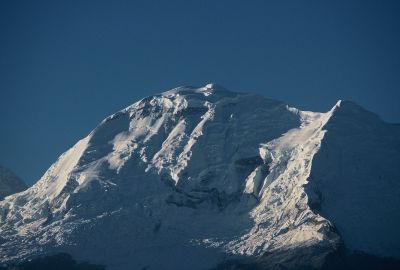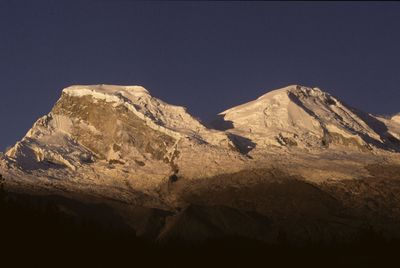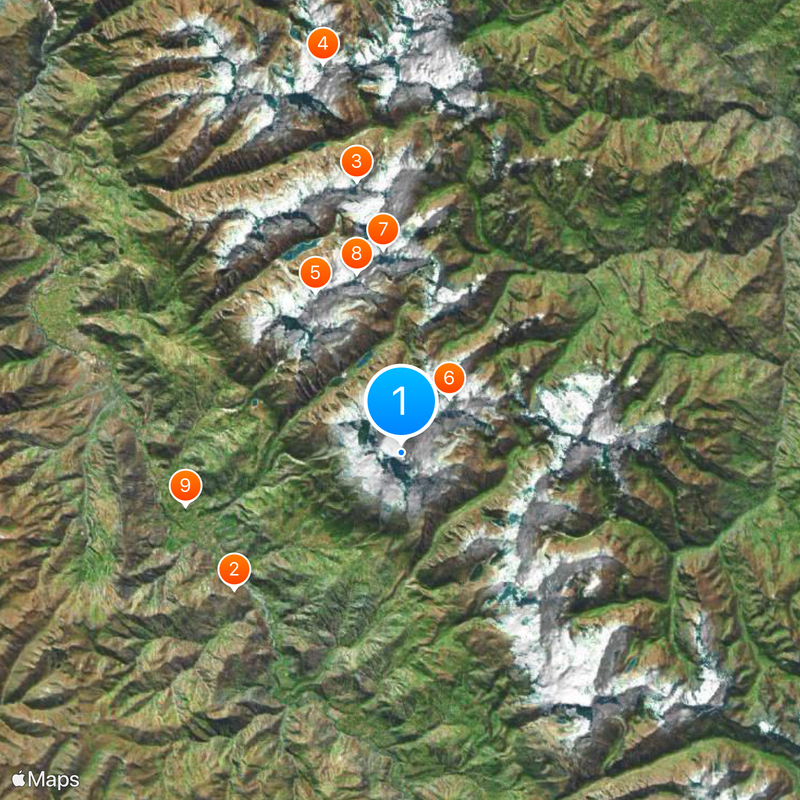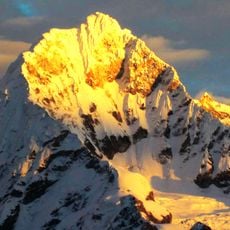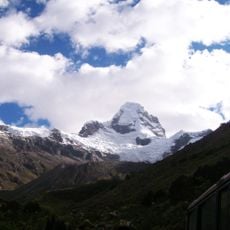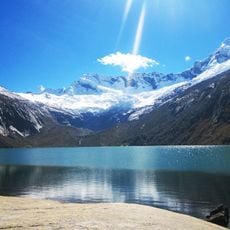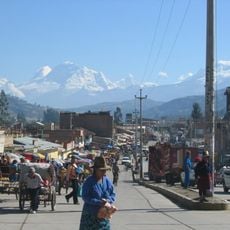
Huascarán, Mountain summit in Cordillera Blanca, Peru.
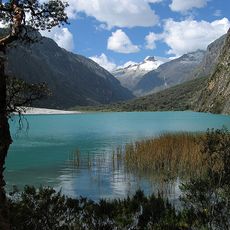
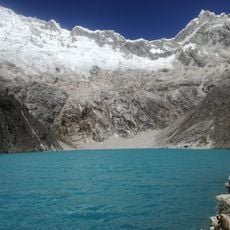
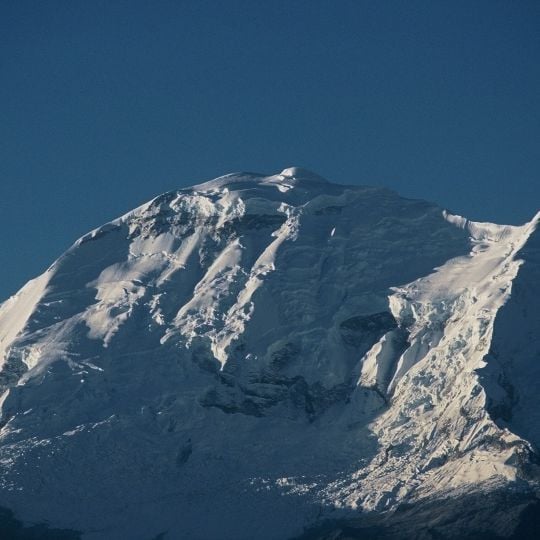
Huascarán is a mountain summit in the Cordillera Blanca within Ancash Department, reaching 6768 meters above sea level at its southern peak and marking the highest point in Peru and across the tropical zone. The granite formation presents itself as a twin-peaked massif with northern and southern main summits connected by a glaciated saddle.
A German-Austrian expedition reached the southern main summit on July 20, 1932, opening the modern era of exploration in this mountain region. The northern route later became the preferred climbing path, and several expeditions in following decades documented the glaciation and geological characteristics of the massif.
The summit takes its name from the nearby settlement of Huashco, with the suffix -urán describing a location beyond and below in the regional language. Visitors to the surrounding villages encounter residents who maintain their connection to the Cordillera Blanca through oral traditions and local customs, viewing the peak as part of their geographic heritage.
The climbing season runs from March through November, with mountaineers needing advanced techniques and several days of adjustment to the altitude. The ascent typically requires six days and includes overnight stays at high camps to allow the body to adapt gradually to the thin air.
Measurements at this summit show the lowest gravitational pull on the surface of Earth at 9.76392 meters per second squared, due to the near-equatorial location and geological composition. This physical characteristic makes the mountain a reference point for geodetic studies and gravity experiments.
The community of curious travelers
AroundUs brings together thousands of curated places, local tips, and hidden gems, enriched daily by 60,000 contributors worldwide.