Mojeque, Pre-Columbian ceremonial complex in Casma Valley, Peru
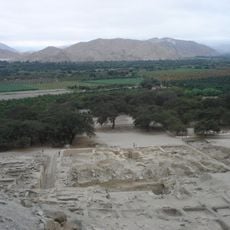
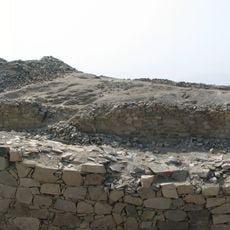
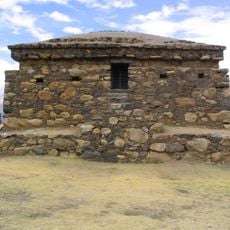
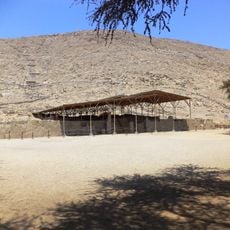
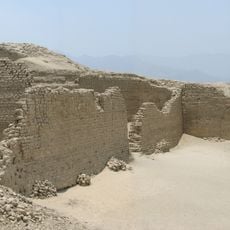
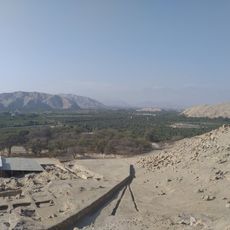
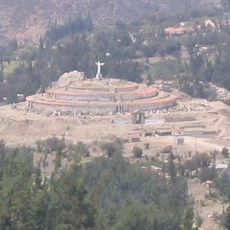
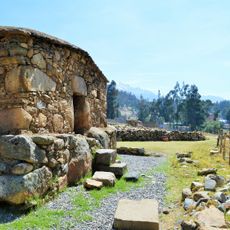
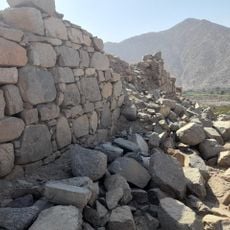
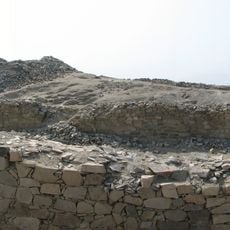
Mojeque is a large ceremonial and residential complex with two main structures, Moxeke and Huaca A, connected by open plazas and stone buildings. The site also contains over a hundred administrative mounds and numerous storage rooms distributed across multiple levels with staircases.
The complex belongs to the Initial or Formative Period, roughly 1800 to 900 BCE, and predates Chavín de Huántar. Julio C. Tello worked at Moxeke in 1937 and linked it to Chavín; in the 1970s Rosa Fung Pineda placed Huaca A's main occupation in the Initial Period. Thomas and Sheila Pozorski studied the site in the 1980s and dated Huaca A to about 1400 BCE. After roughly a millennium of use it was abandoned, probably after an invasion.
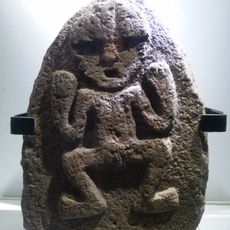
The Moxeke pyramid displays large clay sculptures of anthropomorphic heads and figures that reflect the religious beliefs of early Peruvian societies. These carvings suggest the importance of ceremonial gatherings in daily life at this location.
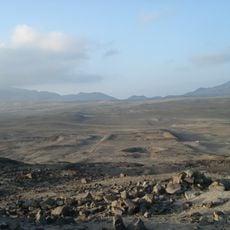
The two main mounds, Moxeke and Huaca A, stand 1.3 km apart and are aligned precisely to N 41° E; the whole site covers about 2 km2, so plan to walk between sectors. Huaca A's summit holds a grid of rooms entered from the north and south.
The two main mounds, Moxeke and Huaca A, stand 1.3 km apart and are aligned precisely to N 41° E, with more than 100 smaller mounds aligned to them across a site of about 2 km2. The Pozorskis also found evidence of an earlier construction phase beneath the site.
The community of curious travelers
AroundUs brings together thousands of curated places, local tips, and hidden gems, enriched daily by 92,657 contributors worldwide.