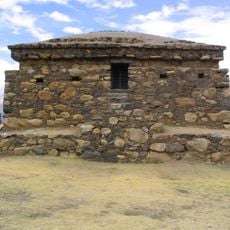
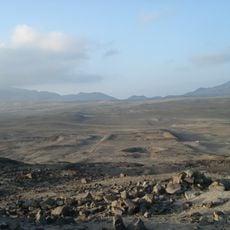
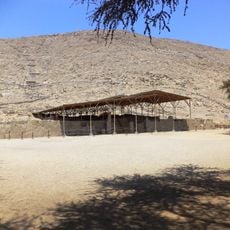
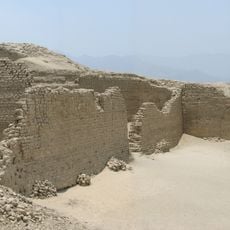
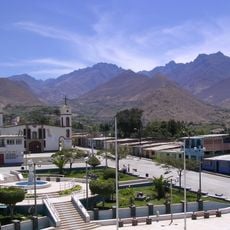
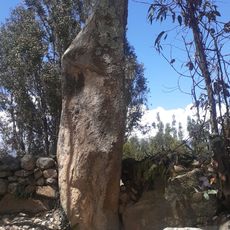
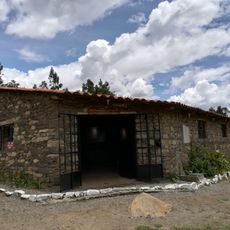
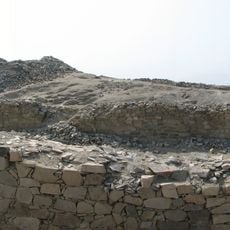
Sechin Alto, Archaeological site in Casma District, Peru.
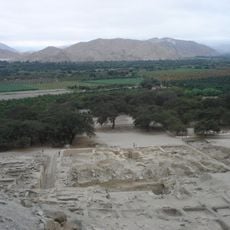
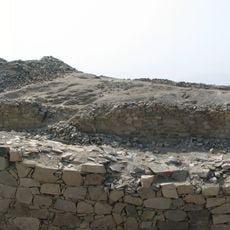
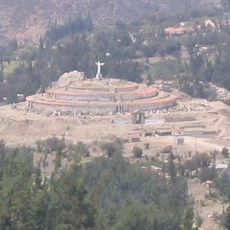
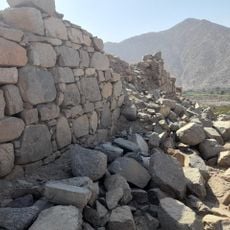
Sechin Alto is a monumental complex of the Early Formative period (2000–1500 BC) on the left bank of the Sechín River. Its main structure, the Templo, is a pyramidal platform 350 m by 300 m and 35 m high, built of large stones alternating with smaller ones and containing conical adobe bricks. Five courts with sunken circular plazas extend in front, and the whole complex runs about 2 km northwest.
Built between 2000 and 1500 BC, Sechin Alto was the administrative center of the Sechin polity during the Initial Period. Julio C. Tello first described it in 1937, calling it the largest architectural structure in the Americas. Rosa Fung Pineda and Carlos Williams studied it in 1979, followed by Thomas and Shelia Pozorski in 1987.
The site contains five ceremonial courts with sunken circular areas that once served as gathering places for rituals and community meetings. These layouts reveal how the early inhabitants organized their social and spiritual lives.
Sechin Alto lies on the left bank of the Sechín River, east of the town of the same name in Casma Province, Ancash. The monumental core stretches about 2 km along a northwest axis, with the Templo and five courts at its head. Many surrounding mounds stand among cultivated fields and remain unexcavated, so keep to visible paths.
Julio C. Tello, visiting the Casma valley in 1937, judged Sechin Alto the largest architectural structure in all the Americas. Its 300 to 400 hectares make it about five times the size of Caral, yet the surrounding mounds, oriented along the main axes, lie among cultivated fields and remain unexcavated.
The community of curious travelers
AroundUs brings together thousands of curated places, local tips, and hidden gems, enriched daily by 92,777 contributors worldwide.