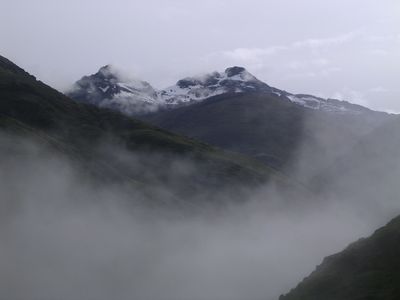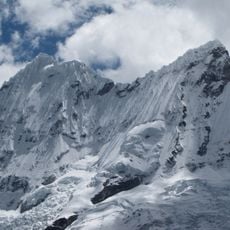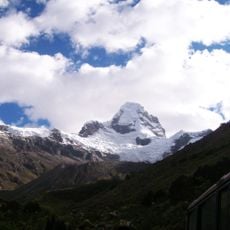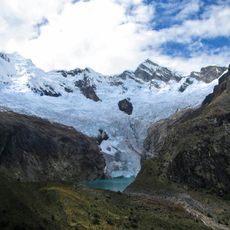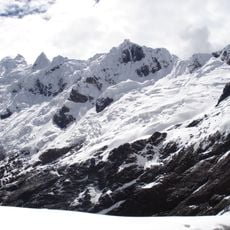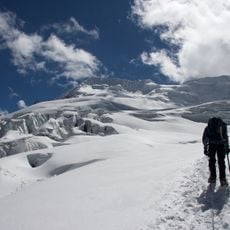
Coñocranra, Mountain summit in Cordillera Negra, Peru.
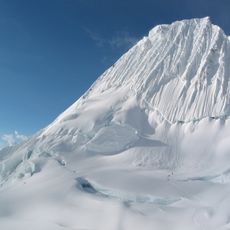
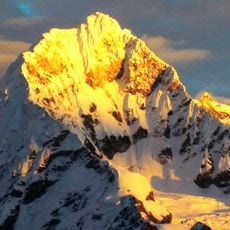
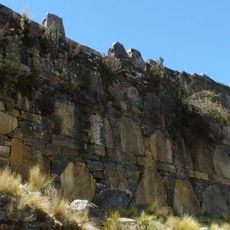
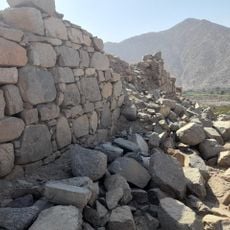
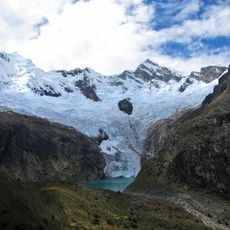
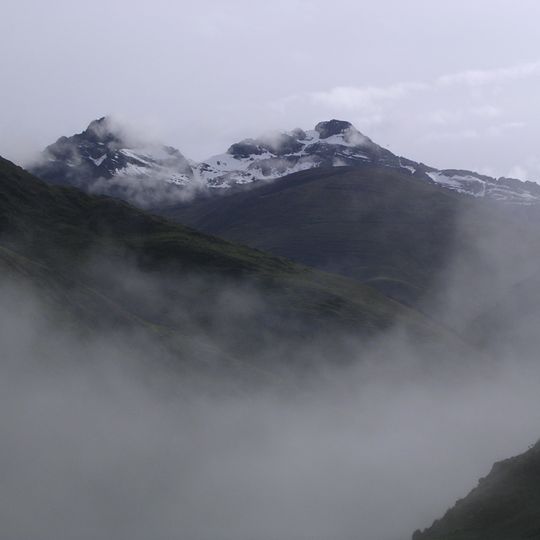
Coñocranra is a summit in the Cordillera Negra range located at approximately 5,180 meters elevation, making it the highest point in this mountain chain. The peak features rocky terrain and steep slopes characteristic of the high-altitude Andean environment, with access requiring traversal through surrounding ridges and valleys.
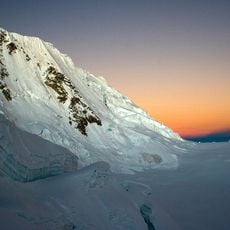
The name comes from Quechua: coñoc (hot) and ranra (stony ground), giving "hot stony ground"; other readings link qunupa (amulet) and ranra (landslide debris). The peak is the highest in the Cordillera Negra at 5,181 m, per Peru's National Geographic Charter. Its snows, though temporary, last most of the year: they build from December to March, melt by late July, and return lightly in the August pushpa before melting to late November.
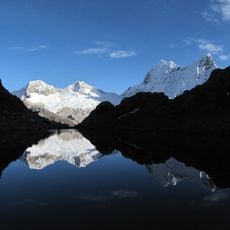
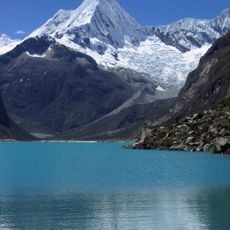
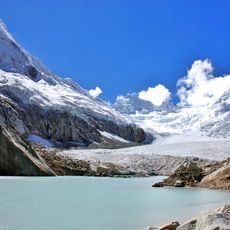
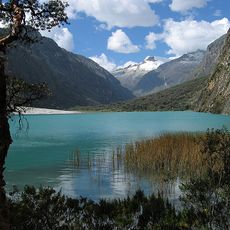
The name comes from Quechua: coñoc (hot) and ranra (stony ground), giving "hot stony place"; another reading links quñuq (lukewarm) with ranra. A lake of the same name lies at about 4,350 m, the westernmost of a chain draining toward the Carhuamarca or Racuaybamba, at the source of the Nepeña River.
The summit lies in the Santa Province of the Ancash Region, and the snow line shifts with the rains: snow covers the top from December to March and melts by late July, with a lighter load in the August pushpa that fades by late November. In drier years the snow periods are shorter. The Coñocranra lagoon, the westernmost of a chain draining toward the Carhuamarca or Racuaybamba river at the source of the Nepeña, sits above 4,350 m.
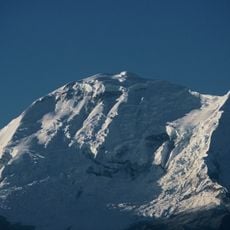
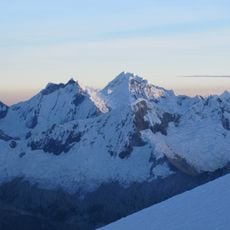
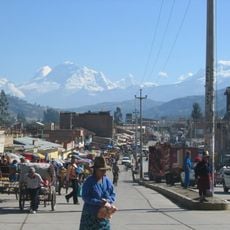
The summit is the only point in the Cordillera Negra from which the snows of Huascarán (6,768 m) can be made out across the Santa River valley, framed by the Cordillera Blanca. Between the two ranges the river runs through the Callejón de Huaylas before both chains converge at the Cañón del Pato.
The community of curious travelers
AroundUs brings together thousands of curated places, local tips, and hidden gems, enriched daily by 92,815 contributors worldwide.