Bandurria, Peru, Archaeological site in Huacho, Peru.
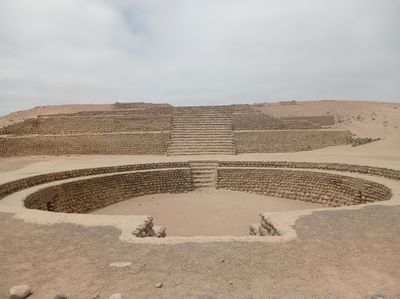
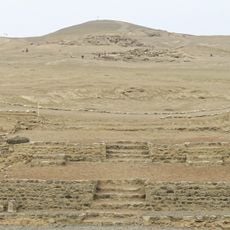
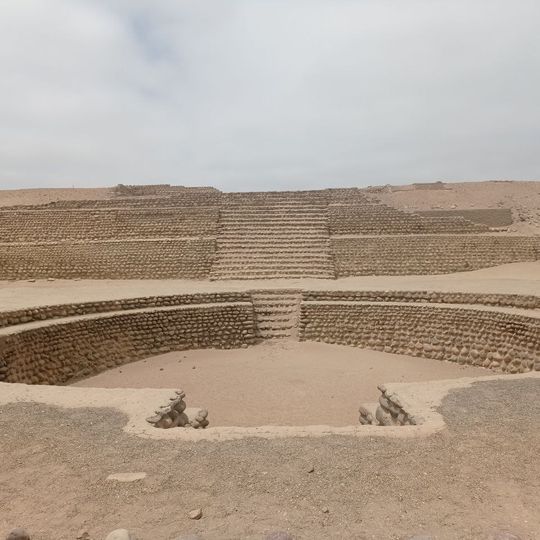
Bandurria is a large archaeological site of 54 hectares near Huacho, at kilometer 141 of the Panamericana Norte. It has at least four major mounds with a sunken circular plaza and stairways, built from boulders and mortar. The photograph shows a stepped platform with a central stair and a semicircular retaining wall enclosing a sandy floor.
Bandurria dates to the Late Archaic (Late Preceramic) period, with radiocarbon dates placing it around 3200 BCE, older than Caral. It was discovered in 1973 when Santa Rosa irrigation water exposed funerary bundles, and Rosa Fung investigated it in 1973 and 1977. Alejandro Chu's project, restarted in 2005, uncovered monumental architecture of boulders and mortar.
Ancient residents built sunken circular plazas that served as gathering spaces for communities and ceremonies. These layouts reveal how important shared rituals were to their daily life and beliefs.
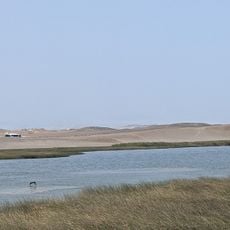
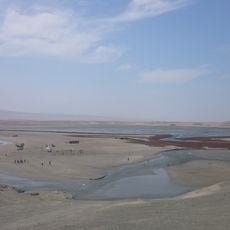
The site lies at kilometer 141 of the Panamericana Norte, in the Paraíso de Playa Chica area south of Huacho. The monumental sector with its sunken circular plaza and stairways stands beside the wetland; the larger domestic sector was largely destroyed by the Santa Rosa irrigation project. The ground is sandy and the climate dry; bring sun protection and water.
Archaeologists uncovered the oldest cotton fishing net ever found in Peru at this location, revealing that early residents mastered advanced textile techniques. This discovery shows how ancient communities used fibers not just for clothing but also for practical tools.
The community of curious travelers
AroundUs brings together thousands of curated places, local tips, and hidden gems, enriched daily by 93,406 contributors worldwide.