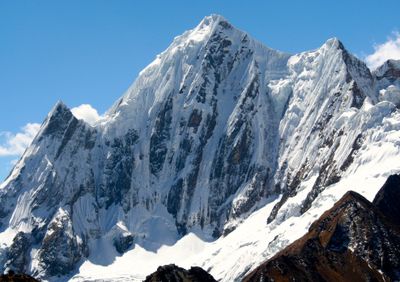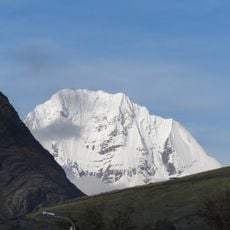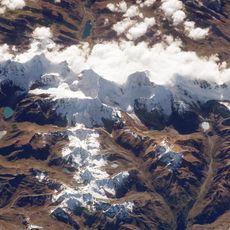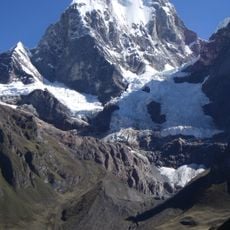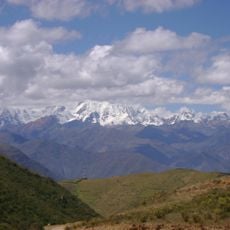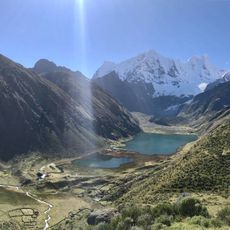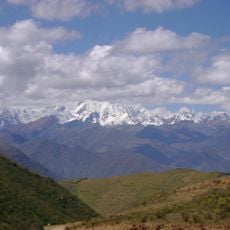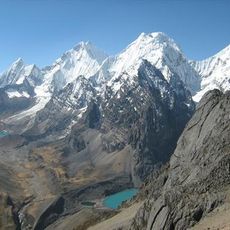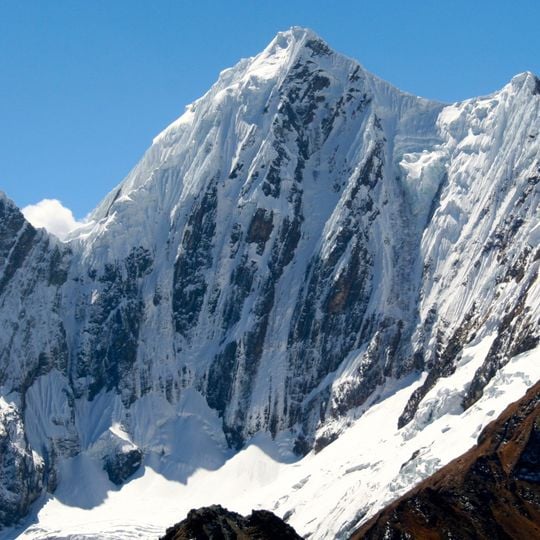
Rasac, Mountain summit in the Cordillera Huayhuash, Peru
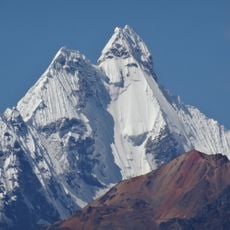
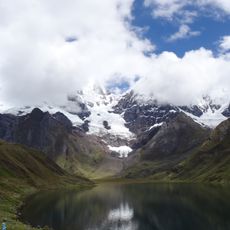
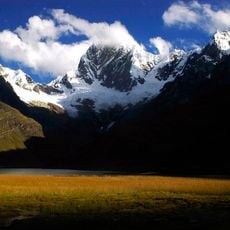
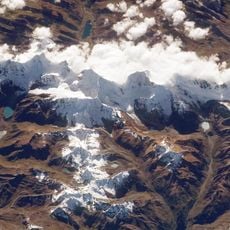
Rasac is a mountain in the Cordillera Huayhuash rising to 6,017 meters with a broad profile and varied terrain. Its structure features limestone and sandstone layers that create multiple climbing routes across the peak.
Rasac is built mainly of limestone interbedded with sandstone and shale, sediments laid down on the ocean floor. About 90 million years ago the Nazca oceanic plate began sliding under the South American plate, pushing and folding these beds upward. Marine fossils such as bivalves and ammonites can still be found in some limestone layers.
The name comes from the Quechua language meaning toad, reflecting how indigenous communities named the mountains in their territory. This naming tradition shows a direct connection between people and the natural world around them.
Climbers need to bring full self-sufficiency equipment and be well prepared for high altitude conditions before attempting the ascent. Due to the mountain receiving very few expeditions each year, proper planning and acclimatization are essential.
The Right Buttress of the West Face has never been climbed. The East Face is almost entirely rock, and its normal snow route up a gulley was reported in summer 2007 to be completely out of condition. A 1996 traverse by James Garrett and Paul Gonzales climbed five rock pitches on the east face, followed the corniced south ridge to the summit and descended the north ridge and northeast face.
The community of curious travelers
AroundUs brings together thousands of curated places, local tips, and hidden gems, enriched daily by 93,010 contributors worldwide.