Cave of Lauricocha, Archaeological cave site in Huanuco Province, Peru.
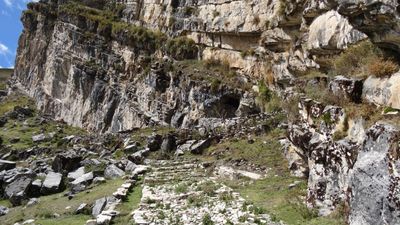
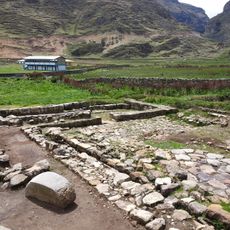
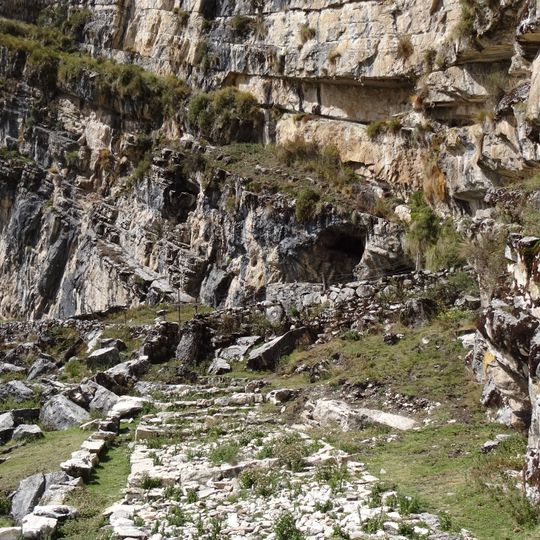
The Cave of Lauricocha is a cave in the cliff face of a layered grey and tan rock wall at about 3,900 meters near the source of the Marañón River. Its dark, irregular mouth opens above a slope of rough terraces built from light grey and whitish stones, with loose rocks, dry grass and low green vegetation. The walls inside show rock paintings.
Excavations in the 1950s uncovered human remains dating back approximately 11,000 years, making this one of South America's earliest known occupation sites. The work established this location as crucial for understanding the early settlement of the Andes.
The cave displays traces of daily life through stone tools and animal bones left by early Andean inhabitants. These artifacts tell the story of hunting practices and activities of nomadic groups who spent time here over many centuries.
The site lies over 100 kilometers from Huanuco city and requires travel into the mountain region where weather can be unpredictable. Access is free, though visitors should prepare for high altitude and cold conditions typical of the area.
Augusto Cardich found eleven human bodies of adults and children in the caves, and one of the skulls appears to have been artificially deformed. Bones of deer, camelids and Andean tarucas were found alongside stone tools.
The community of curious travelers
AroundUs brings together thousands of curated places, local tips, and hidden gems, enriched daily by 93,034 contributors worldwide.