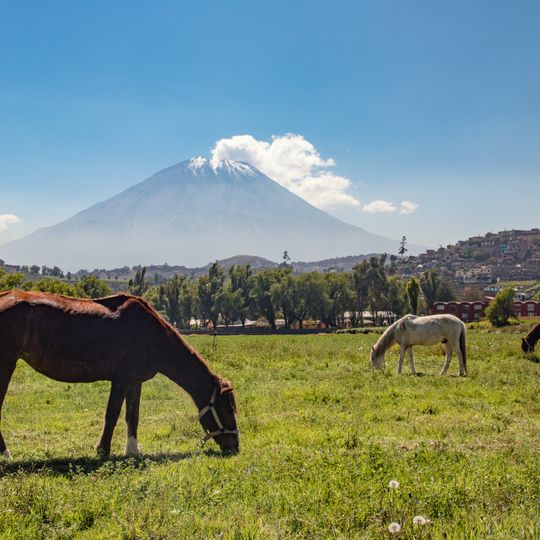
Misti, Stratovolcano near Arequipa, Peru
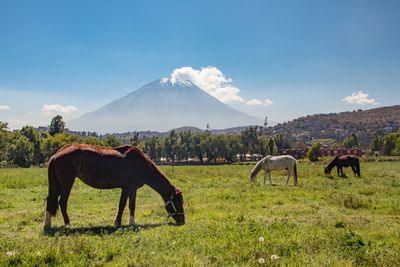
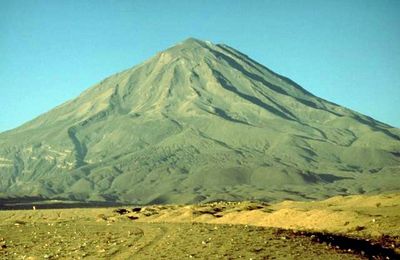
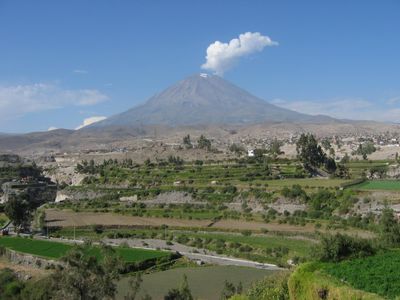
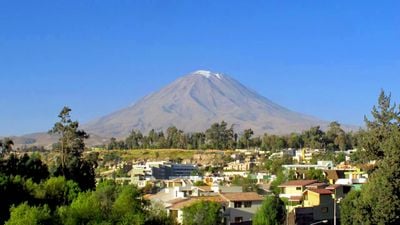
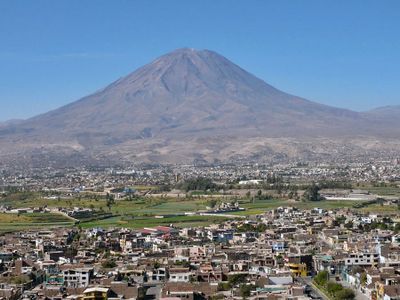
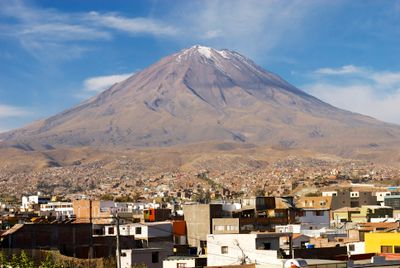
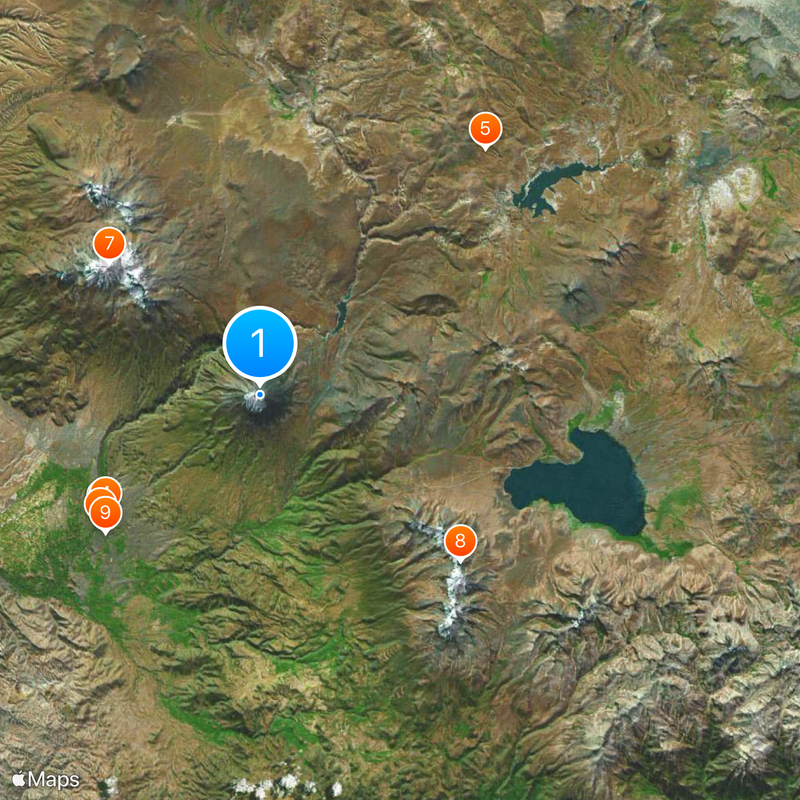
El Misti is a steep-sided stratovolcano rising 5,822 metres above sea level on the rim of its outer crater, just north of Arequipa. Its two nested summit craters hold an inner lava plug or dome pierced by vents that emit volcanic gases. The upper slopes are largely barren, while lower elevations carry scrub and bushy vegetation.
Misti grew in four stages, each ending with a summit collapse that formed a bowl-shaped depression. The last two major eruptions occurred about 2,000 years ago and in 1440–1470 AD, during the reign of Túpac Yupanqui; the Inca offered capacocha sacrifices on the mountain at that time. Since then only minor activity and gas release have been recorded, including large fumaroles in 1870.
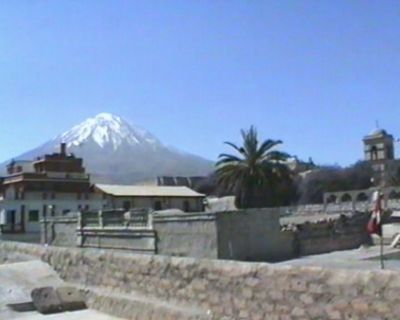
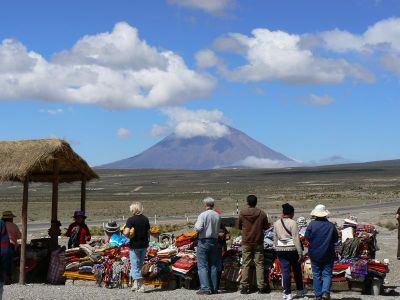
The name Misti may come from Quechua or Spanish, meaning 'mixed', 'mestizo' or 'white', possibly referring to the snow on the cone; in Spanish it is written with the article as el Misti. Earlier sources called it Putina, 'mountain that growls' in Puquina, and the Aymara names Anukara or Anuqara mean 'dog', from its dog-like profile seen from the Altiplano. Arequipa treats the volcano as its hausberg and features it on the city seal.
Climbing expeditions require proper acclimatization since the base camp sits at 4,500 meters (14,764 feet) and the route typically spans two days. Hikers should bring warm clothing and sufficient water, as temperatures drop considerably at night and no natural water sources exist along the ascent.
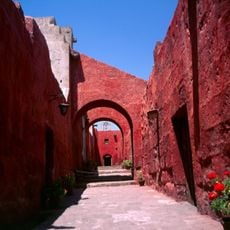
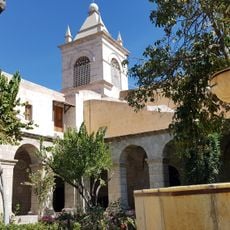
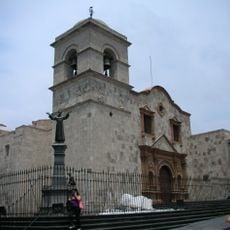
Volcanic material from andesite rock has been quarried for centuries as sillar, a white stone widely used in colonial architecture throughout Arequipa. Visitors can see the connection between the mountain and the city when walking through historic neighborhoods, where buildings are constructed from this local stone.
The community of curious travelers
AroundUs brings together thousands of curated places, local tips, and hidden gems, enriched daily by 92,610 contributors worldwide.