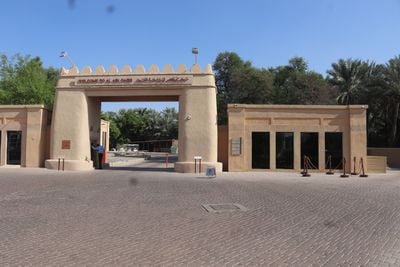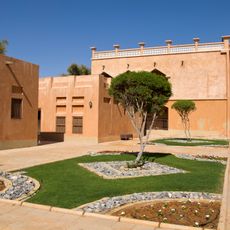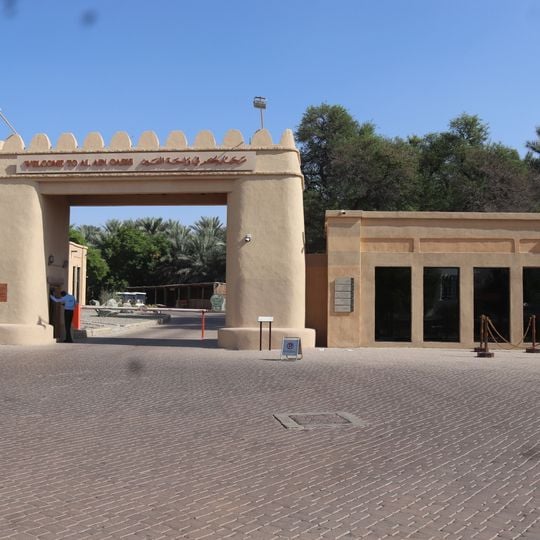
Al Ain Oasis, UNESCO World Heritage oasis in Al Ain, United Arab Emirates.
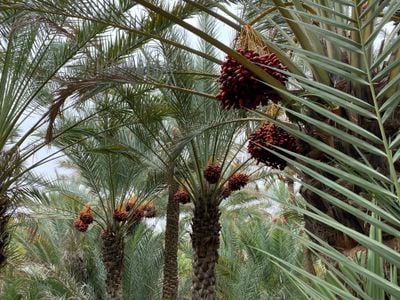
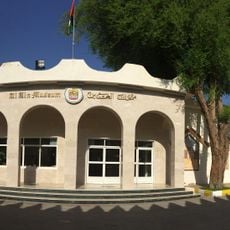
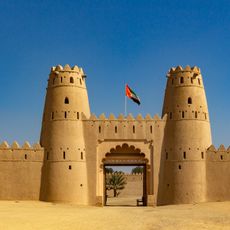
Al Ain Oasis is a 1,200-hectare expanse of more than 147,000 date palms producing 100 varieties, set in Al-Mutawa'a District. Its farms are fed by the falaj, an underground irrigation system also called Al-Jahily Falaj, which channels water from boreholes through open and subterranean passages. The oasis lies east of Al-Jahili District, with Al Ain National Museum and Sultan Bin Zayed Fort to its east and Al Ain Palace Museum to its west.
Al Ain Oasis is also known as Al-Jahily Falaj, and its underground falaj channels carry water from boreholes to the farms and palms. The system is thousands of years old and is used across Oman, the UAE, Iran and India. The oasis itself dates back more than 4,000 years and was built by Zayed the Grand. In 2011 it was listed by UNESCO as a World Heritage Site.
The oasis is also called Al-Jahily Falaj, and its water comes from a falaj, an underground channel system that carries water from boreholes to the farms and palms. The same technique is used in Oman, the UAE, Iran and India. The oasis lies in Al-Mutawa'a District, with Al Ain National Museum and Sultan Bin Zayed Fort to the east and Al Ain Palace Museum to the west.
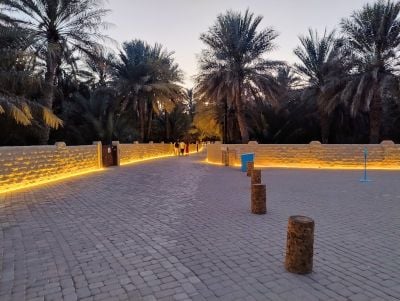
The oasis lies in Al-Mutawa'a District in central Al Ain, with Al Ain National Museum and Sultan Bin Zayed Fort to its east and Al Ain Palace Museum to its west. Paths run between the walled palm plots, and the underground falaj channels that feed them can be seen at points along the route.
The oasis holds more than 147,000 date palms of about 100 varieties, a collection built up over centuries of farming. Its Arabic name, Wāḥat Al-ʿAyn, means "Oasis of the Spring". It is also called Al-Jahily Falaj, after the irrigation channel that feeds it.
The community of curious travelers
AroundUs brings together thousands of curated places, local tips, and hidden gems, enriched daily by 92,653 contributors worldwide.