Gjirokastër Mosque, Ottoman mosque in Gjirokastër, Albania
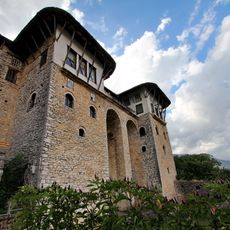
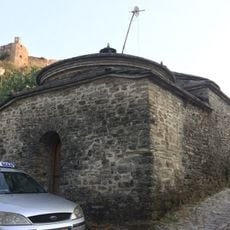
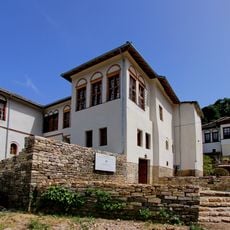
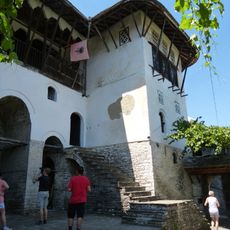
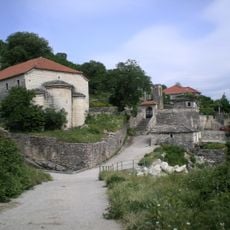
The Bazaar Mosque, also called Memi Bey Mosque, is a Sunni mosque built in 1757 in Gjirokastër's Old Bazaar. It is one of fifteen mosques originally built in the city during the Ottoman era. Nearby stands a two-story octagonal building constructed in 1727, originally a Bektashi cemevi and now used as a madrasah.
Built in 1757 in the Old Bazaar, the mosque was part of Memi Pasha's 17th-century urban plan for the New Bazaar, which burned in the following century; only the mosque survived. Designated a Cultural Monument in 1973, it escaped the communist demolition that removed twelve other mosques. Under Albania's religion ban it served as a training hall for circus acrobats, who hung trapezes from its high domed ceilings.
Locals call it Xhamia e Pazarit, the Bazaar Mosque, after the Old Bazaar quarter where it stands, and also Xhamia e Memi Beut after Memi Pasha, whose 17th-century urban plan placed it here. It is a Sunni mosque, and the two-storey octagonal building of 1727 beside it, once a Bektashi cemevi, now serves as a madrasah.
The mosque stands in the Old Bazaar quarter, a short walk from the bazaar's main lane; the surrounding streets are steep and paved with stone. The nearby two-storey octagonal building of 1727, once a Bektashi cemevi and now a madrasah, is a separate structure worth noting. Visitors should dress modestly and avoid entering during prayer.
The two-storey octagonal building next to the mosque, built in 1727, began as a Bektashi cemevi, was closed under communism and now serves as a madrasah. The mosque itself, spared in 1973 as a Cultural Monument, housed circus acrobats who hung trapezes from its high domed ceilings during Albania's religion ban.
The community of curious travelers
AroundUs brings together thousands of curated places, local tips, and hidden gems, enriched daily by 92,605 contributors worldwide.