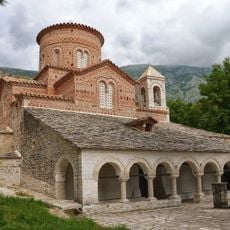
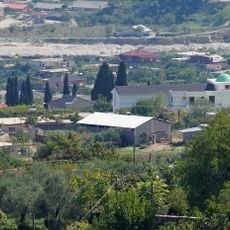
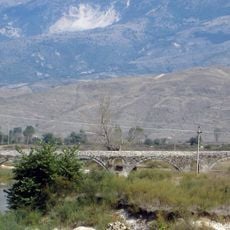
Antigonea Archaeological Park, Archaeological site in Qendër Libohovë, Albania.
Antigonea is an archaeological park in southern Albania that preserves the remains of an ancient Hellenistic city. The site displays old streets, public spaces, homes, and defensive walls that reveal how this settlement was organized.
Antigonea was founded in the 3rd century BC, probably by Pyrrhus of Epirus, who named it after his wife Antigone, daughter of Berenice I of Egypt. It controlled the Drino valley and the straits that took its name. Having sided with the Macedonians, it was burned in 167 BC on the order of the Roman consul Aemilius Paullus, along with 70 towns of Epirus, and was never rebuilt.
The city's name comes from Antigone, daughter of Berenice I and step-daughter of Ptolemy I of Egypt, one of Pyrrhus's wives. Bronze round tokens inscribed in Greek with the name Antigoneia, used as entry tokens for the theatre or public festivals, allowed archaeologists to identify the ruins at Jerma as this city. Excavations also uncovered houses of the trading and craft classes, with workshops for metalworking and leather processing.
The site is fairly easy to explore on foot, with good views across the entire excavation. Visitors should wear sturdy shoes and be prepared for uneven ground, especially if it has rained recently.
The city's identification was confirmed by round bronze tokens inscribed in Greek with "Antigoneion", used as entry tokens for the theatre or public festivals; they were the first epigraphic document of the site. The walls ran 4 km around the hill, built of cut stone blocks, with square towers guarding the gates.
The community of curious travelers
AroundUs brings together thousands of curated places, local tips, and hidden gems, enriched daily by 94,420 contributors worldwide.