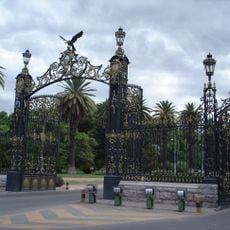
Plaza Pedro del Castillo, Historic square and national heritage site in central Mendoza, Argentina.
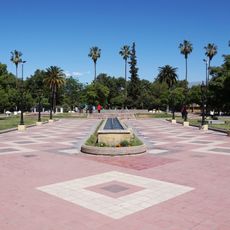
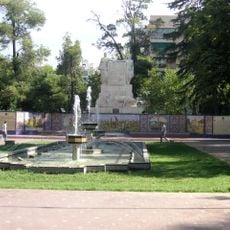
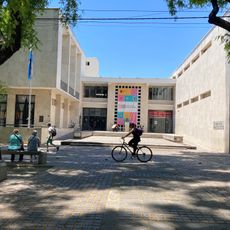
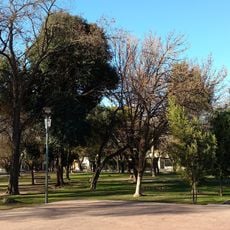
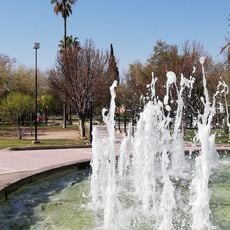
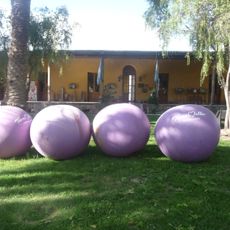
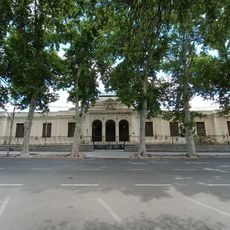
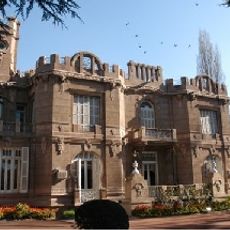
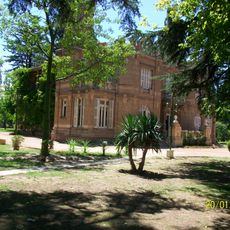
Plaza Pedro del Castillo is a historic square in central Mendoza that shows remains of colonial architecture and features a central fountain. Trees from Argentina, Spain, and Brazil grow throughout the space, and surrounding streets connect it from every direction.
Pedro del Castillo founded Mendoza in the Huentata valley on 2 March 1561; Juan Jufré moved it west of the Cacique Guaymallén canal on 28 March 1562, to the square's present site. The 20 March 1861 earthquake destroyed the colonial buildings around the square, and the city was refounded 1 km southwest. From 1877 the Cabildo site held the municipal slaughterhouse, and from 1930 to 1989 the municipal market.
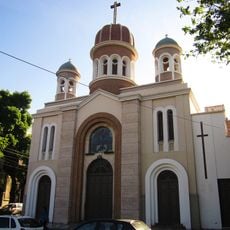
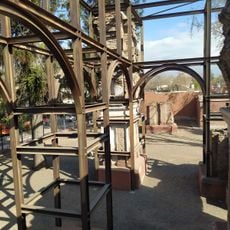
The square was ringed by four large churches: the Iglesia Matriz dedicated to Nuestra Señora de la Candelaria, Santo Domingo, San Agustín, the convent of Santa Mónica and San Francisco, dedicated to the Inmaculada Concepción, whose ruins still stand. In the second decade of the 19th century a double row of low tamarind trees framed the central space.
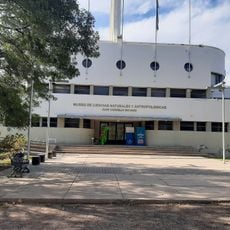
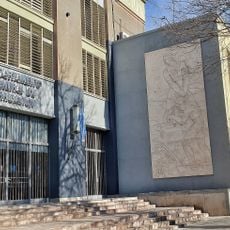
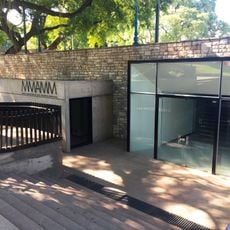
The square sits on the east bank of the Cacique Guaymallén canal, one kilometre northeast of the modern city centre rebuilt after 1861. The Museo del Área Fundacional and the Ruinas de San Francisco adjoin it, so the three can be visited together on foot.
Between 1814 and 1817, General San Martín prepared his Army of the Andes here for the liberation campaign. This military presence influenced South American history and made this location a starting point for major regional changes.
The community of curious travelers
AroundUs brings together thousands of curated places, local tips, and hidden gems, enriched daily by 93,635 contributors worldwide.