Plaza de Armas, Central square in Cusco, Peru.
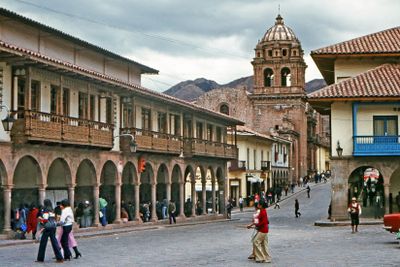
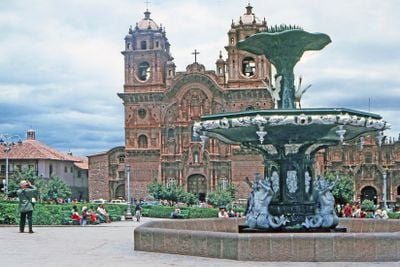
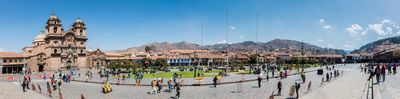
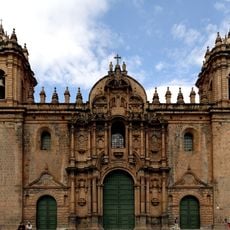
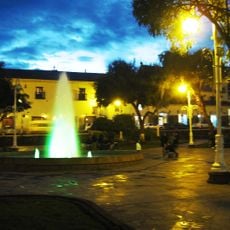
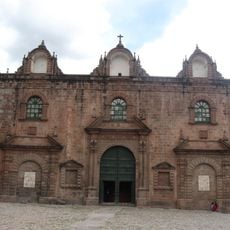
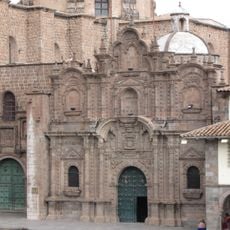
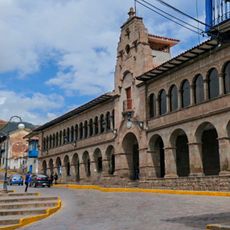
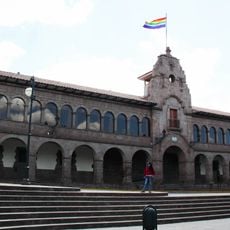
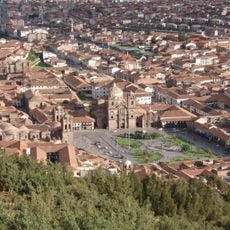
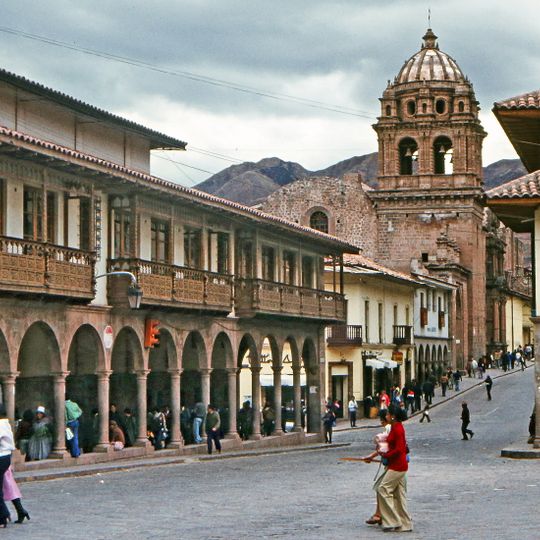
Plaza de Armas is a broad square paved with grey stone, bounded on two sides by a long two-storey building with pale ochre walls, a terracotta tiled roof and a continuous lower arcade of stone arches, with a carved wooden balcony above. At one end rises a stone bell tower with a ribbed dome; across the square stands the reddish-brown stone cathedral facade with two symmetrical bell towers and a central section of columns, niches and statues. A tiered fountain of dark green metal with figures on its basin stands in the foreground.
The square began as Haukaypata, a central gathering place in the Inca realm. When Spanish colonizers arrived in 1534, they built Catholic churches and grand houses, replacing earlier Inca structures and creating a new identity for the space.
The Quechua name Huacaypata, still used by many cusqueños, means "place of weeping", linked to Inca nobles' meditation ceremonies that ended in tears. An archbishop banned them and replaced them with the cathedral's "three-hour sermon", which also tends to end in tears.
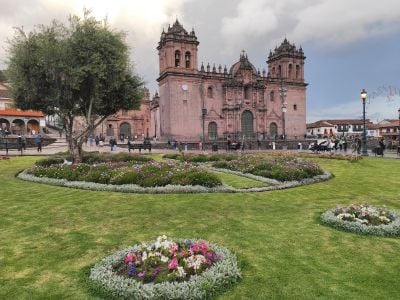
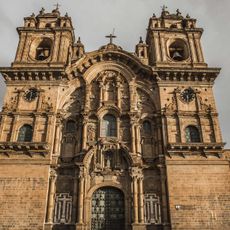
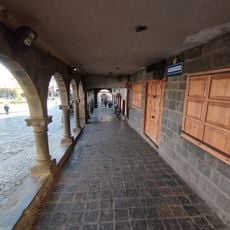
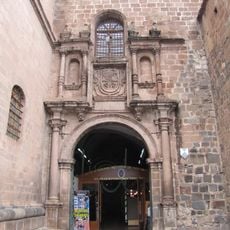
The square lies in the historic centre, with the Cathedral on the northeast side and the Iglesia de la Compañía de Jesús on the southeast. The arcaded portals of Panes, Harinas and Carrizos shelter shops and eateries along the edges. The Saphy river runs culverted beneath the paving, so the surface is level and walkable throughout.
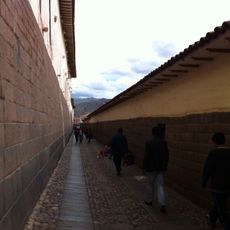
The square sits where four major routes of the Qhapaq Ñan intersect, the ancient Inca road network that once connected their entire realm. This old arrangement still shapes how people move through the city today.
The community of curious travelers
AroundUs brings together thousands of curated places, local tips, and hidden gems, enriched daily by 92,565 contributors worldwide.