Church of Santa Catalina, Colonial church in central Cusco, Peru
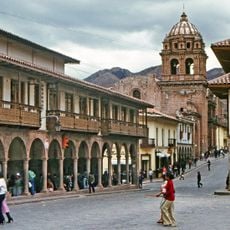
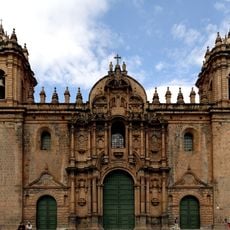
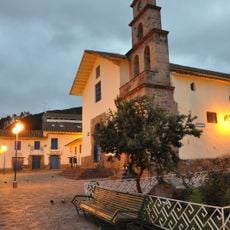
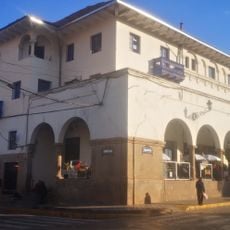
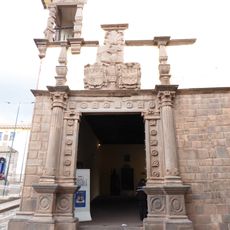
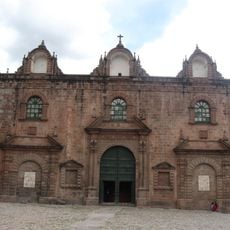
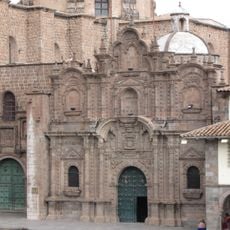
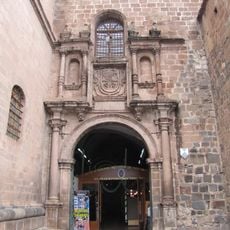
The Church and Convent of Santa Catalina is a cloistered Dominican convent 100 metres southeast of Cusco's Plaza de Armas, on the site of the Inca Acllawasi. Its church has a barrel vault carried on transverse arches with a dome over the main chapel; the convent is built of adobe and stone around two cloisters, each with a fountain ordered by Bishop Manuel de Mollinedo y Angulo around 1678.
The site was the Inca Acllawasi palace before the Spanish crown divided the land; in 1603 Bishop Fernando de Mendoza bought it for the Dominican nuns of Santa Catalina, whose monastery opened in 1605. The first church, by architect Francisco de la Cueva, rose between 1610 and 1612. The 1650 earthquake destroyed it, and rebuilding ran from 1651 to about 1669.
Since 1975 the convent has housed a museum with a permanent exhibition of canvases from the Cusco School. Among the first nuns was Melchora Clara Coya, great-granddaughter of Huayna Capac, admitted despite rules restricting mestizas. The two cloisters each hold a fountain ordered by bishop Manuel de Mollinedo y Angulo around 1678.
The convent stands about 100 metres southeast of the Plaza de Armas, on the site of the Inca Acllawasi. It is a cloistered community of Dominican nuns, so the church and the museum collection of Cusco School paintings are the parts open to visitors; the two cloisters and their 1678 fountains are not freely walkable.
The convent buildings are made of adobe and stone, not stone alone. Bishop Manuel de Mollinedo y Angulo had a fountain built in each of the two cloisters around 1678, and since 1975 the complex has also housed a museum with a permanent display of Cusco School canvases.
The community of curious travelers
AroundUs brings together thousands of curated places, local tips, and hidden gems, enriched daily by 92,676 contributors worldwide.