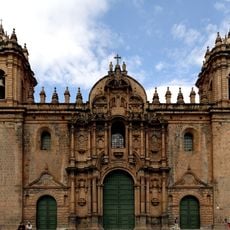
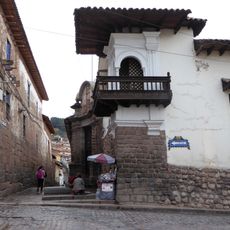
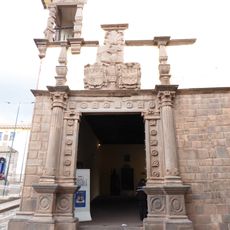
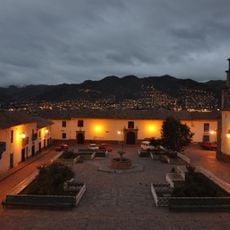
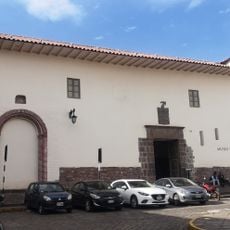
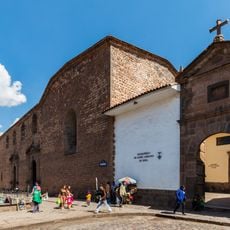
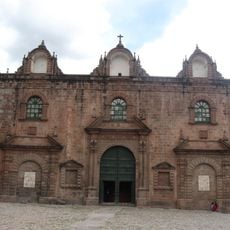
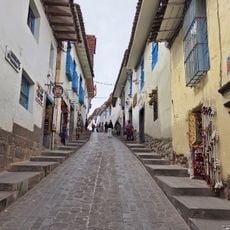
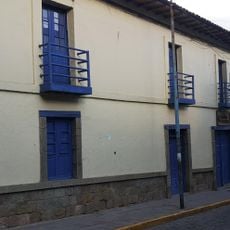
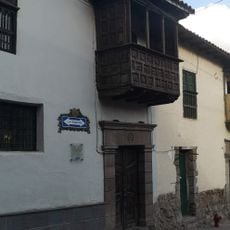
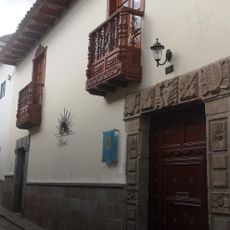
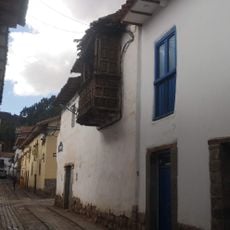
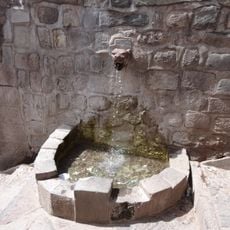
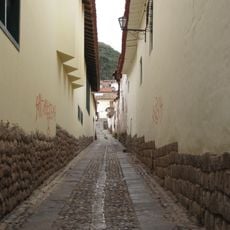
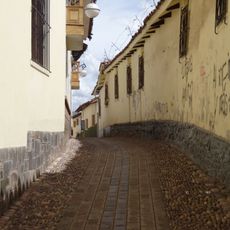
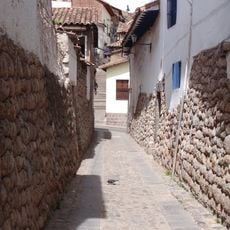
Choquechaka street, Colonial street in Cusco, Peru.
Choquechaka is a cobblestone street in Cusco that stretches roughly 550 meters and connects different neighborhoods throughout the city. Both sides are lined with walls and bordered by shops, restaurants, and residential buildings that define its character.
Until the early 20th century the line of the street was the canalized bed of the Tullumayo River, separating the San Cristóbal and San Blas neighbourhoods. Between 1909 and 1919 the upper course was piped underground between the Huaca Sapantiana and Calle Ruinas, creating the street. It lies on the Inca axis linking Colcampata with Limacpampa, where the road to Collasuyo began. Since 1972 it belongs to the Monumental Zone of Cusco.
The name comes from Quechua Chuqi Chaka, meaning "gold bridge" or "metal bridge", a reference to the crossing over the Tullumayo. The street marks the old boundary between the San Cristóbal and San Blas quarters, and it lies on the route that linked Colcampata with Limacpampa, where the Inca road to Collasuyo began.
The street is relatively flat and easy to walk, though the cobblestone surface can be uneven in places. Visitors will find many shops, restaurants, and lodging options along the way, making for a pleasant stroll.
The street follows the covered bed of the Tullumayo River, culverted between 1909 and 1919 from Huaca Sapantiana to Calle Ruinas. Until the early 20th century that channel marked the boundary between the San Cristóbal and San Blas neighbourhoods. In 2014 the route was recognised as part of the Tawantinsuyo road network.
The community of curious travelers
AroundUs brings together thousands of curated places, local tips, and hidden gems, enriched daily by 93,894 contributors worldwide.