Archbishop's Palace of Cusco, Museum in Cusco, Peru
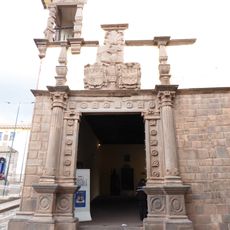
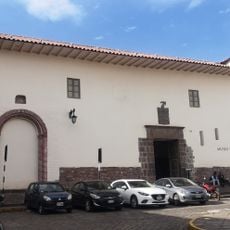
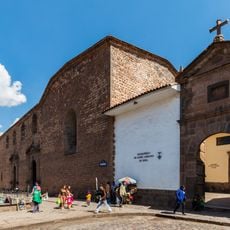
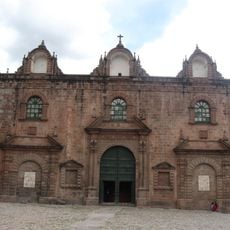
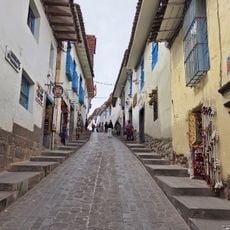
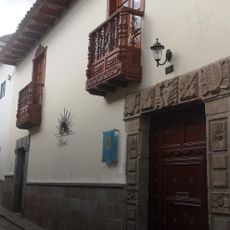
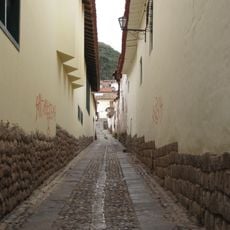
The Archbishop's Palace of Cusco is a colonial mansion on Hatun Rumiyoc street whose perimeter is formed by Inca walls, with the Stone of Twelve Angles set in its north wall. Its Baroque doorway on Hatun Rumiyoc has salomonic columns and a pediment carved with noble coats of arms, and a corner balcony with a double-arched, mullioned doorway faces the streets Hatun Rumiyoc and Herrajes. Since 1966 it houses the Museum of Religious Art.
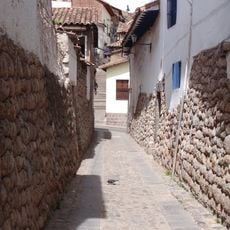
Inca Roca, who reigned roughly between 1350 and 1380, built his palace on this plot, and three of the four outer walls still show Inca masonry. After the Spanish founding of Cusco the house passed to Vicente de Valverde, the city's first bishop, who lived there with his sister María. In the first half of the 17th century it belonged to Pablo Costilla y Gallinato, second Marquis of San Juan de Buenavista, and in 1719 passed through marriage to the Rocafuerte family, who gave it its present colonial character.
The palace displays religious artworks from the colonial era, including paintings by artists of the Cusco School. The collection shows how artistic traditions developed after Spanish arrival and shaped local spiritual expression.
The museum sits on Hatun Rumiyoc street and is easy to locate when exploring the historic center. Visitors should plan their visit accordingly since opening hours are limited and daytime provides the best viewing conditions.
The Stone of Twelve Angles sits in the north wall of the palace, on Hatun Rumiyoc street, not in a Spanish-built section: the Inca masons cut the block to fit twelve surrounding stones. Three of the four outer walls are Inca work, and the colonial builders raised their house against them rather than reworking the masonry.
The community of curious travelers
AroundUs brings together thousands of curated places, local tips, and hidden gems, enriched daily by 93,327 contributors worldwide.