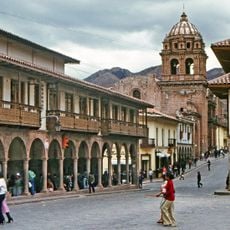
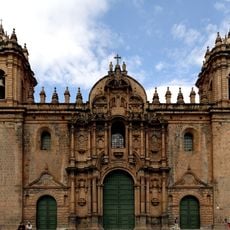
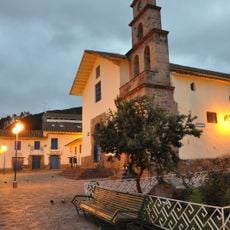
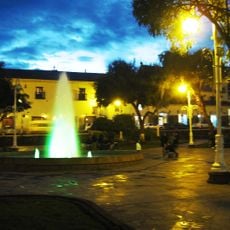
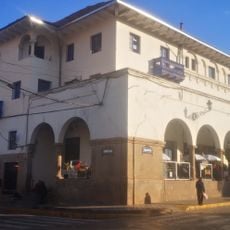
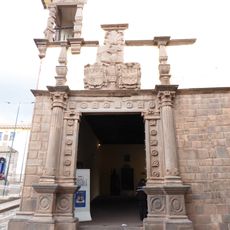
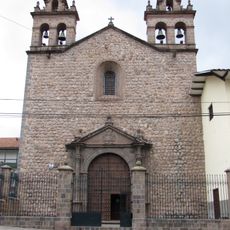
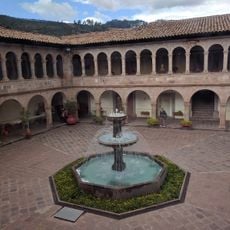
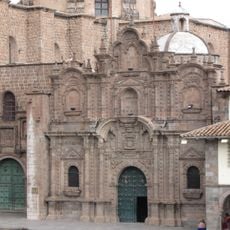
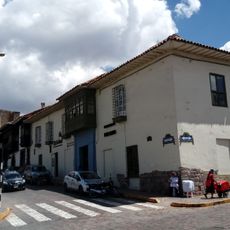
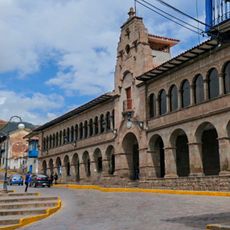
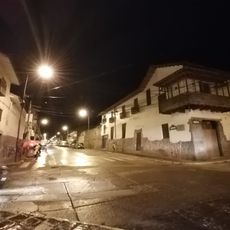
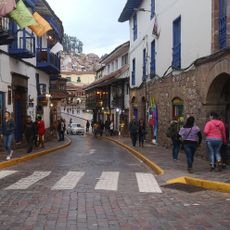
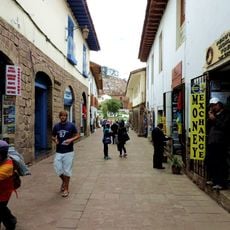
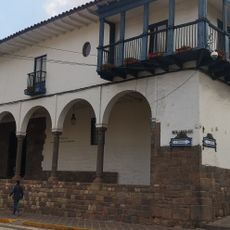
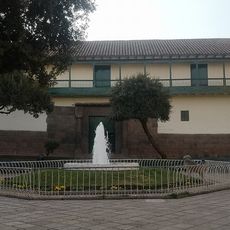
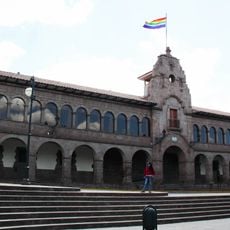
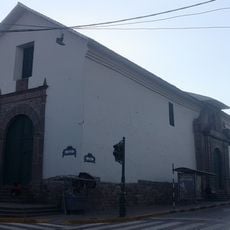
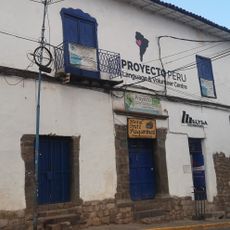
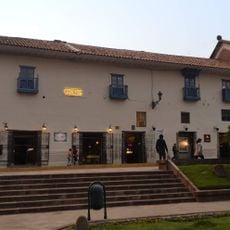
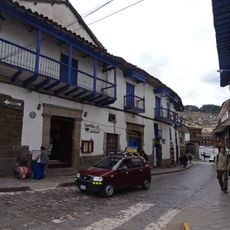
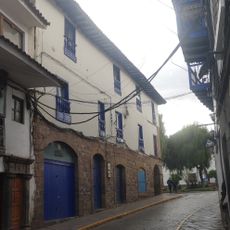
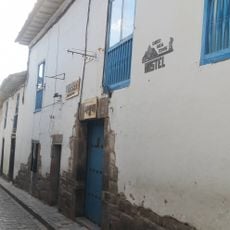
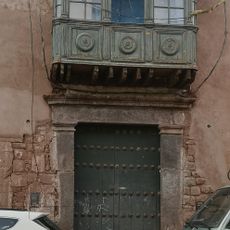
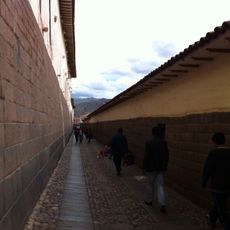
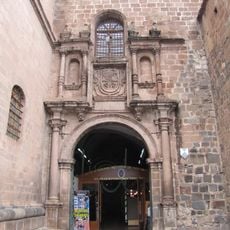
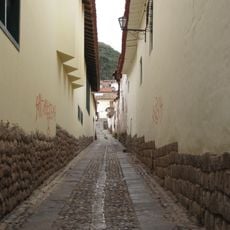
Calle Plateros, UNESCO Heritage street in central Cusco, Peru.
Calle Plateros is a street in the monumental zone of Cusco that, together with Calle Saphy and Avenida El Sol, follows the course of the former Saphy River from northwest to southeast. It was laid out between 1922 and 1927, when the canalization of the river in this sector was completed. At its intersection with Portal de Panes stood the palace of Inca Pachacutec, Qasana.
The Saphy River, channeled under the Inca and used as the southwest boundary of the royal palace sector, was fully covered in this section between 1922 and 1927, creating the present street. In 1555, corregidor Sebastián Garcilaso de la Vega had authorized buildings in the middle of Huacaypata, forming blocks such as those between Espaderos, Del Medio, Mantas, Heladeros and Espinar. The street has formed part of the Monumental Zone of Cusco since 1972 and of the UNESCO historic centre since 1983.
The name Plateros comes from the silversmiths who set up their workshops here during colonial times and created a tradition of metalwork. Today visitors can still find shops selling handmade silver goods and other local crafts along the street.
The street sits at the heart of Cusco's historic center and offers easy access to Plaza de Armas and major shopping areas. When exploring, visitors should note that the stone surface can be uneven in places.
Beneath the street runs an underground channel of the ancient Saphy River, which once marked the boundary of Inca royal palaces. This hidden water reveals how Spanish conquerors layered their infrastructure over the previous Inca civilization.
The community of curious travelers
AroundUs brings together thousands of curated places, local tips, and hidden gems, enriched daily by 94,077 contributors worldwide.