Tingo María National Park, National park in Huánuco Region, Peru
Tingo María National Park is a protected reserve in a montane forest region featuring limestone caves and distinctive mountain formations. The landscape is shaped by water sources, including natural thermal springs and the nearby Huallaga River.
The area gained protection status in 1950 as a nature reserve and later became a full national park in 1965. This transformation helped safeguard an important montane forest region for the long term.
The name Tingo María comes from Quechua tinku, meaning confluence, for the meeting of the Huallaga and Monzón rivers. Local tradition holds that the Bella Durmiente ridge resembles a young woman lying on the grass, watching over the town and its forests; residents say storms over the city are the work of a malevolent god recalled to her.
Visitors reach the area via main roads from Tingo María city, and organized tours lead to caves and hiking trails. It helps to bring comfortable hiking shoes and water, since paths cross varying terrain.
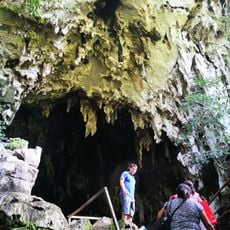
The cave's name comes from a long-standing mistake: the birds inside are oilbirds (Steatornis caripensis), not owls. Their calls, used like sonar in the dark, create an almost deafening din. The entrance measures about 20 by 25 m at 673 m altitude, and the galleries are not fully explored.
The community of curious travelers
AroundUs brings together thousands of curated places, local tips, and hidden gems, enriched daily by 92,633 contributors worldwide.