Palacio Municipal de Guayaqui, Renaissance Revival governmental building in central Guayaquil, Ecuador.
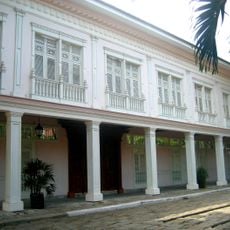
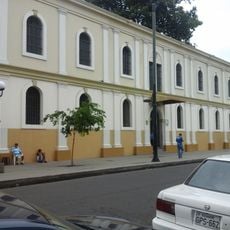
The Palacio Municipal occupies a full block at Malecón Simón Bolívar and Diez de Agosto in central Guayaquil, with entrances also on Pichincha and Clemente Ballén. Architect Francesco Maccaferri designed it in a mix of neoclassical and baroque styles; the first stone was laid on 31 July 1924 and the building was completed in 1928.
The colonial cabildo moved to La Sabaneta in 1693. A Casa Consistorial opened in 1817 on the former Mercado de Abastos site; there the Act of Independence was signed in 1820. After the wooden building was burned in 1908, the Compañía Italiana de Construcciones won the 1921 tender. Francesco Maccaferri designed the new palace, whose first stone was laid on 31 July 1924; it opened on 27 February 1929 under President Isidro Ayora.
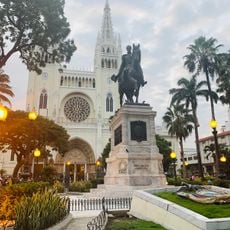
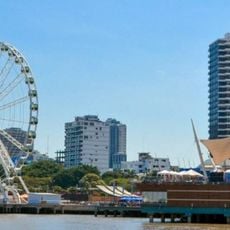
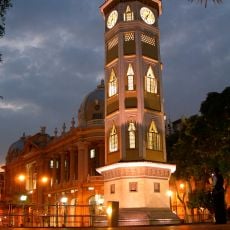
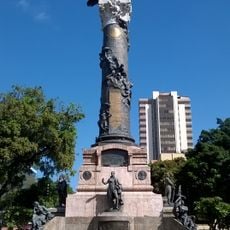
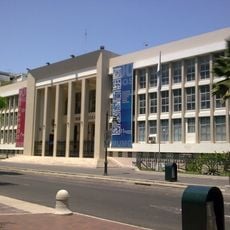
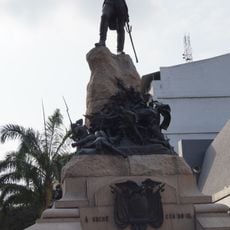
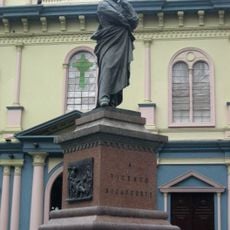
The building faces the Plaza de la Administración, a pedestrian square created by closing Clemente Ballén and Pichincha streets to traffic. On it stand monuments to Antonio José de Sucre and to the Forge of Vulcan (Fragua de Vulcano). Across the Malecón Simón Bolívar rises the Morisca Tower.
The building sits in the city center and is easily reached on foot. Visitors should check opening times in advance and ask which areas are open to the public.
The building occupies a full block between Malecón Simón Bolívar and Diez de Agosto, with entrances also on Pichincha and Clemente Ballén. The stretch of Clemente Ballén from Pedro Carbo to the Malecón, and of Pichincha from Aguirre to Diez de Agosto, is closed to vehicles, forming the Plaza de la Administración. Across that square stands the former Gobernación del Guayas, now home to the Universidad de las Artes, and the square holds monuments to Antonio José de Sucre and to the Forge of Vulcan.
The community of curious travelers
AroundUs brings together thousands of curated places, local tips, and hidden gems, enriched daily by 93,613 contributors worldwide.