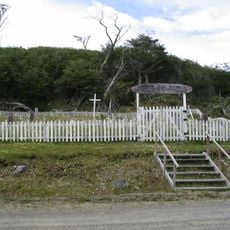
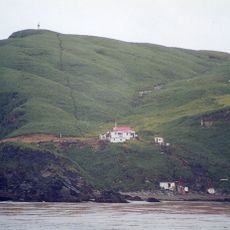
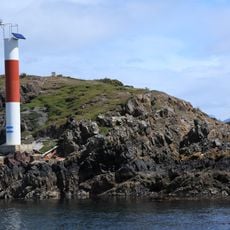
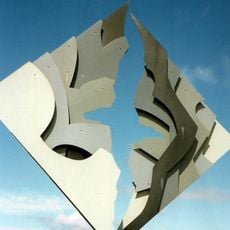
Cabo de Hornos National Park, National park in Wollaston Archipelago, Chile.
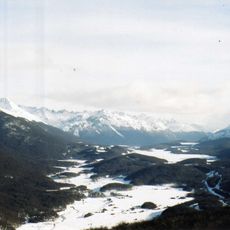
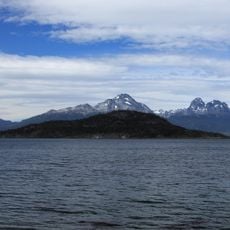
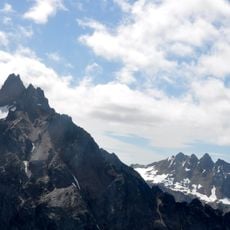
Cabo de Hornos National Park covers dozens of islands and smaller landmasses within the Wollaston Archipelago, with rugged terrain rising to rocky peaks. The landscape supports seabirds, marine mammals, and specialized plant communities adapted to the extreme southern climate.
The Cape Horn region was sighted on 29 January 1616 by the Dutch merchant Isaac Le Maire, who named it Hoorn after the Dutch city his expedition sailed from. Chile's Ministry of Agriculture created the national park on 26 April 1945 by Supreme Decree No. 995, covering the Wollaston and Hermite archipelagos. UNESCO added it to the Cabo de Hornos Biosphere Reserve in 2005 together with Alberto de Agostini National Park.
The name Hoorn comes from the Dutch city the 1616 expedition sailed from, not from the cape's shape. The park lies within the Cabo de Hornos Biosphere Reserve, designated by UNESCO in 2005 together with Alberto de Agostini National Park. Sailing around Cape Horn remains a landmark in the history of sail navigation.
There is no land access to the park; entry is by sea. From Puerto Williams the boat trip takes about 12 hours. From Punta Arenas, the Australis cruise fleet runs the route from October to April. The park is administered by CONAF.
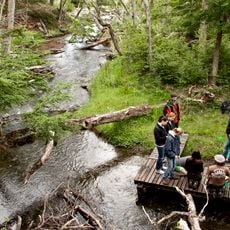
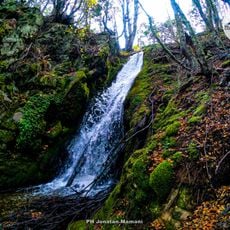
The protected area preserves the world's southernmost forest ecosystem and contains roughly 5 percent of global bryophyte diversity. These tiny plants form an essential part of the landscape in such harsh conditions.
The community of curious travelers
AroundUs brings together thousands of curated places, local tips, and hidden gems, enriched daily by 94,094 contributors worldwide.