Omora Ethnobotanical Park, Protected natural area in Navarino Island, Chile.
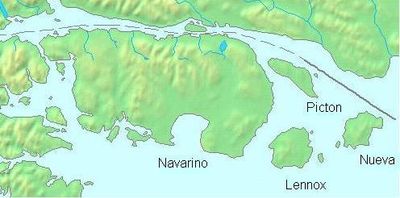
Omora Ethnobotanical Park covers 1,000 hectares on Navarino Island, 2.5 km west of Puerto Williams. It protects deciduous lenga and ñirre forests, evergreen coigüe and canelo stands, Sphagnum bogs, and alpine meadows. A rocky stream with clear water, fallen logs, and moss-covered banks runs through the forest, and a wooden boardwalk on a metal frame crosses the water.
The protected area was established in 2000 with the goal of linking conservation efforts to scientific research. The Omora Foundation and the Universidad de Magallanes joined forces to put this vision into practice.
The park's name comes from the Yaghan word for the ruby-throated hummingbird (Sephanoides sephaniodes), the world's southernmost hummingbird. The park's herbarium code, OMORA, repeats the name. The Yaghan, the region's indigenous people, gave the bird this name.
The park lies 2.5 to 4 km west of Puerto Williams, on the south bank of the Beagle Channel, and is open year-round for ecotourism, education and research. Access is via the Róbalo river valley; a wooden boardwalk with a metal frame crosses the stream. Trails pass deciduous lenga and ñirre stands, evergreen coigüe forest and Sphagnum bogs.
The site uses an uncommon research approach that links scientific work directly with visitor experiments. Visitors actively participate in field observations using special tools, rather than just watching from the sidelines.
The community of curious travelers
AroundUs brings together thousands of curated places, local tips, and hidden gems, enriched daily by 94,256 contributors worldwide.