El Rey National Park, National park in Salta Province, Argentina.
El Rey National Park covers 44,162 hectares in the Anta Department of Salta Province, from about 750 to 2,000 metres in elevation. Its five forest levels range from palo blanco and palo amarillo trees to ferns and epiphytes such as the tank bromeliad. The park protects Yungas cloud forest and transition zones toward Chaco Serrano.
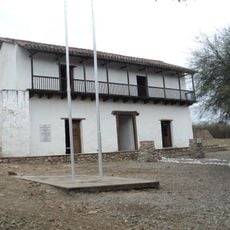
In the 18th century the old El Rey estate was one of the frontier strongholds of Salta and Jujuy, dependent on the Viceroyalty of Peru. In 1767 a royal grant assigned it to Colonel Fernández Cornejo y Rendón, who that year carried out the expulsion of the Jesuits. Decree 18800/1948 of 24 June 1948, under President Juan Domingo Perón, ordered the expropriation of the lands for a national park; law 19292 of 1971 named it El Rey National Park.
The park lies in the Yungas, the oldest inhabited zone of these forests, where farmer indigenous groups left archaeological sites. The name El Rey comes from the colonial estate of that name, one of the eastern frontier strongholds of Salta and Jujuy under the Viceroyalty of Peru. The common monte hen (Penelope obscura) is among the birds recorded here.
The park lies in the Anta Department, about 80 km from Salta by the route through La Viña and El Sauzal, and the final stretch is unpaved. Access depends on dry weather, since rain can make the tracks impassable. The ranger station and camping area sit near the park entrance; no fuel or supplies are sold inside, so fill up and stock up before leaving the city.
The park is the only known home of Aphelandra lilacina, a plant species found nowhere else in the world. This rare species grows exclusively within the protected forest.
The community of curious travelers
AroundUs brings together thousands of curated places, local tips, and hidden gems, enriched daily by 93,938 contributors worldwide.