Iguazú National Park, National park in Misiones, Argentina
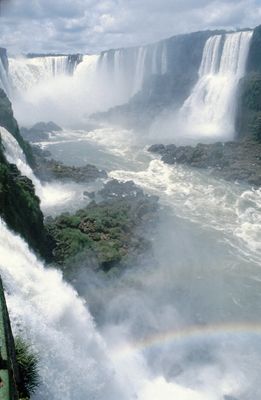
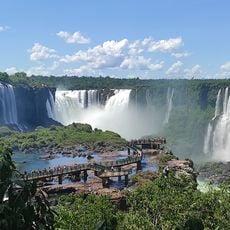
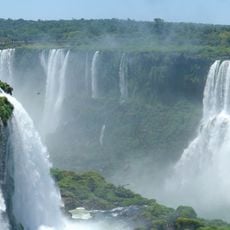
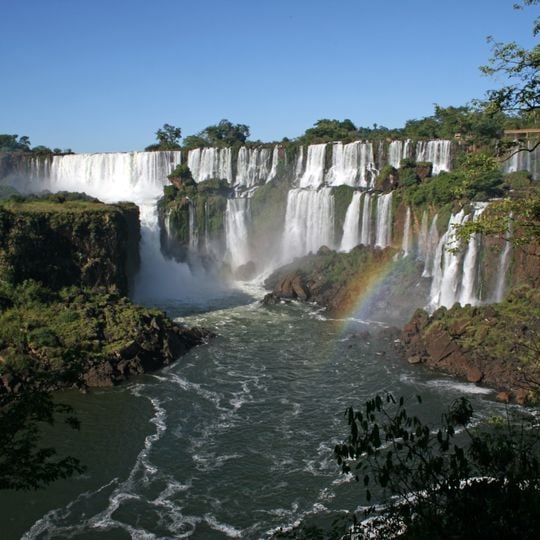
Iguazú National Park is a national park of Argentina in the Iguazú Department, northern Misiones Province, covering 677 km² along the Iguazú River. Its waterfalls form a long arc of separate white curtains broken by vegetated rock ledges, dropping into a churning river where mist raises a rainbow; a walkway stands above the water at the upper right. The park adjoins the Brazilian Iguaçu National Park, together over 2,400 km².
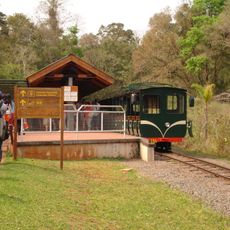
The area was declared a national park in 1934 to protect the waterfalls and surrounding forest from further logging and poaching. Over the following decades, authorities built trails, viewpoints, and a railway to manage visitor numbers.
The name Iguazú comes from the Guaraní language and means great water, a term the people of the region have used for centuries. Visitors today see trails through the rainforest and platforms over the river where the sound of the falls can be heard all day.
The park has two main entrances with trails leading to upper and lower viewpoints, some located just meters from the water. Footwear with good grip is useful as the wooden walkways can become slippery after rain.
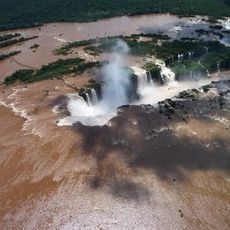
The waterfalls change significantly in volume and force depending on the season, with the strongest flow between December and March. On some summer days, the spray creates lasting rainbows over several falls at once.
The community of curious travelers
AroundUs brings together thousands of curated places, local tips, and hidden gems, enriched daily by 92,612 contributors worldwide.