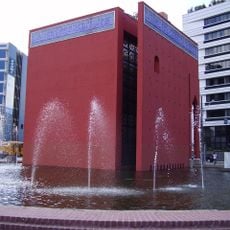
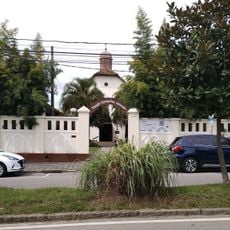
Museu Paranaense, Historical museum in Curitiba, Brazil.
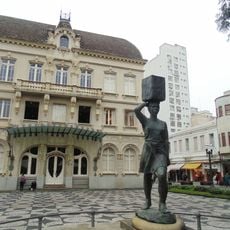
Museu Paranaense is a museum building in Curitiba dedicated to presenting the history and heritage of the Paraná region through multiple exhibition areas. The building contains permanent collections on display, sections for temporary shows, and spaces where researchers work with historical documents and findings.
The institution was established in 1876 to document and preserve the history of the Paraná region. During the 1940s and 1950s, it became a center for serious historical research and scientific study that advanced knowledge about the region's past.
The Territory Occupation Pavilion displays archaeological objects and artifacts from Jesuit missions, showing how different groups of people arrived and settled in this region over time. The space shows the daily lives and interactions of indigenous peoples and early colonists through the items they left behind.
The building opens to visitors from Tuesday through Sunday with no admission charge required. If you want a guided experience, you can arrange a tour in advance with staff who will explain the collections and exhibitions in detail.
Between 1941 and 1954 the museum published 11 volumes of the "Arquivos do Museu Paranaense", over 2,700 pages and nearly 100 scientific articles. Among them is Reinhard Maack's 1945 monograph, the first formal defence of Alfred Wegener's continental drift thesis. Zoologist Jesus Santiago Moure, an authority on bee systematics, and geologist Frederico Waldemar Lange, known for microfossil research, worked here in that period.
The community of curious travelers
AroundUs brings together thousands of curated places, local tips, and hidden gems, enriched daily by 92,824 contributors worldwide.