Autódromo Internacional de Curitiba, Motorsport racing track in Pinhais, Brazil
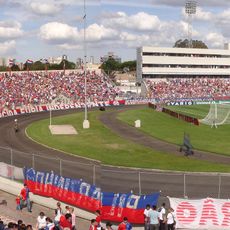
The Autódromo Internacional de Curitiba featured a 2.3-mile (3.7-kilometer) layout with eleven turns and significant elevation changes, creating a technically demanding course that challenged drivers with high-speed sections and tight corners requiring precise vehicle control throughout the lap.
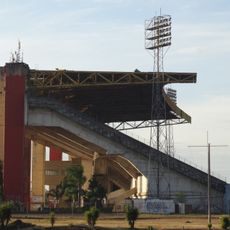
Flávio Chagas Lima began construction in 1965, and the circuit opened on 16 October 1966 after rain postponed the original 9 October date; it was then called Autódromo de Pinhais, in what was still the Administrative District of Curitiba. The first races were held on a 2.7 km tri-oval with a saibro (clay) surface, running anticlockwise with three curves. In 1968, with support from the Paraná state government under Paulo Pimentel, the track was paved and the infield curves were added. In 1987 it was named Circuito Raul Boesel after the Curitiba-born driver, and in 1995 Jauvenal de Oms of the Inepar group invested R$ 13 million in modernisation.
In 1987 the circuit was named Circuito Raul Boesel after the Curitiba-born driver. It regularly hosted national categories such as Stock Car, Fórmula Truck, Copa Turismo GNV, Pick Up Racing and the Campeonato Paranaense de Arrancada. A World Series round came in 2002, and a World Touring Car Championship round in 2006 brought the track worldwide attention.
The circuit's land was sold at the end of 2021, when the Inepar group was in judicial recovery and its recovery plan called for selling the track. On 17 December 2021 demolition began at the Curva da Vitória, then stopped for legal reasons after complaints about the circuit's historical heritage. The planned replacement is a residential and commercial tower development, launched in the second half of 2022.
The circuit was founded by Flávio Chagas Lima, and its official opening on 16 October 1966 had been postponed a week from 9 October because of bad weather. The first races ran counter-clockwise on a three-corner tri-oval whose surface was saibro, a clay-gravel mix; asphalt and the infield corners only arrived in 1968 with support from the Paraná state government under Paulo Pimentel.
The community of curious travelers
AroundUs brings together thousands of curated places, local tips, and hidden gems, enriched daily by 92,807 contributors worldwide.