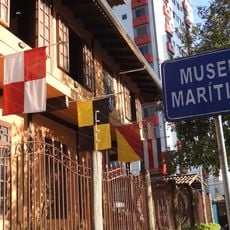
Fishing Museum of Santos, Marine science museum in Santos, Brazil
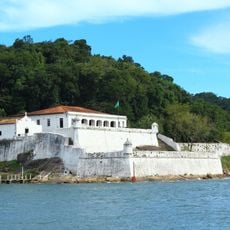
The Fishing Museum of Santos occupies the former Fort Augusto, built in 1734 at the mouth of the Santos estuary. The building, in eclectic style with 1908 architectural influences, was restored in 2014 and holds taxidermied marine animals, skeletons, shells and a sand collection. Its best-known piece is a 23-metre fin whale skeleton weighing 7 tonnes.
The Fishing Museum occupies the ruins of Fort Augusto, built in 1734 to guard one entrance to the Santos estuary alongside the Fortress of Santo Amaro da Barra Grande; the two forts caught intruding ships in crossfire. A 1770 renovation added seven cannons, and in 1837 the fort passed to the Ministry of the Navy. In 1893, during the Naval Revolt, it fought off the cruiser República. By the early 20th century only cannons remained visible among the sand dunes, and the building was listed by CONDEPHAAT on 7 April 1998.
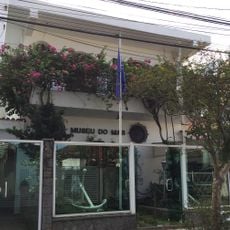
The museum reveals the connection between Santos maritime heritage and local fishing practices through educational exhibits and marine life collections.
The museum reopened on 4 July 2014 after being closed since September 2013, following a restoration that added new paint, roofing, electrical systems and accessibility features. It stands at the site of the old Fort Augusto, near the Santos estuary entrance.
The fin whale skeleton on display was found in Peruíbe and brought to the museum in 1942. It weighs 7 tonnes and measures 23 metres, and its arrival prompted the renewal of the shell, coral, seabird and fish collections.
The community of curious travelers
AroundUs brings together thousands of curated places, local tips, and hidden gems, enriched daily by 92,783 contributors worldwide.