Morumbi Chapel, Religious chapel in Morumbi district, São Paulo, Brazil.
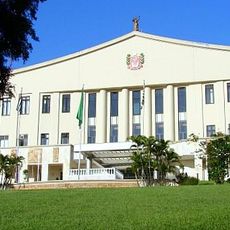
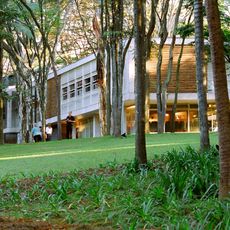
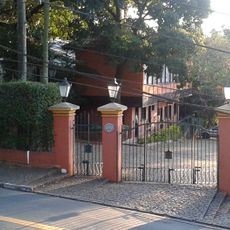
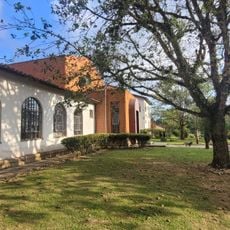
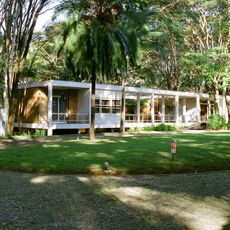
Morumbi Chapel stands on the site of the old Fazenda do Morumbi at Avenida Morumbi 5,387. Architect Gregori Warchavchik completed the ruined rammed-earth (taipa de pilão) walls with brick masonry in 1950, adding an altar, sacristy and baptistery. The baptistery walls carry frescoes by Lúcia Suanê showing the baptism of Christ with angels given Indigenous features.
The oldest document mentioning the site dates from 1825, when it stood near the headquarters of the Fazenda do Morumbi, a 700-alqueire estate owned by Englishman John Rudge, who grew tea there. In 1912 the Archbishop of São Paulo authorized Masses in the chapel, then holding only an image of Saint Sebastian and a crucifix; by 1936 only rammed-earth wall remains survived. In 1949 the Morumby Real Estate Company hired architect Gregori Warchavchik to restore the ruins, completed with brick masonry in 1959.
The interior walls display a fresco showing Christ's baptism where angels have indigenous Brazilian features, reflecting the country's cultural blend. These images tell the story of the region and how different traditions came together there.
The chapel opens Tuesday to Sunday, 9 am to 5 pm, with free entry. Visits are led by a guide in groups of up to 20 people, and groups must book by phone in advance. It stands at Avenida Morumbi 5387, on the grounds of the old Fazenda do Morumbi.
The building now functions as an exhibition space showcasing contemporary art installations within its historic walls. This blend of old and new means each visit can feel different depending on which artists are currently on display.
The community of curious travelers
AroundUs brings together thousands of curated places, local tips, and hidden gems, enriched daily by 93,009 contributors worldwide.