Billings Reservoir, Reservoir in São Paulo, Brazil
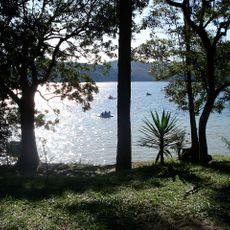
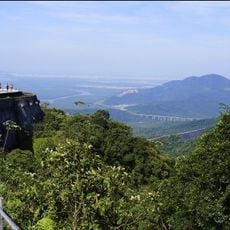
Billings Reservoir is a large water basin in the São Paulo region that spans across multiple municipalities. The water serves primarily for power generation and drinking water supply for the surrounding areas.
The reservoir was conceived on 27 March 1925 by Asa White Kenney Billings, an engineer of the São Paulo Tramway, Light and Power Company, and named after him. The Rio das Pedras dam was begun in 1925 and the reservoir flooded in 1927; the Rio Grande dam followed in 1937. Water was diverted to the Henry Borden plant in Cubatão, and an underground plant added in 1956 raised output to 880 megawatts.
The name honours Asa White Kenney Billings, the American hydroelectric engineer who conceived the reservoir in 1925 for the Light company. Amateur fishing is popular for tilapia, lambaris, Hungarian carp and traíras. Only the Taquacetuba and Riacho Grande arms supply drinking water, treated by Sabesp.
The reservoir is split into eight arms, including Rio Grande, Rio Pequeno, Taquacetuba and Bororé. Only the Taquacetuba and Riacho Grande arms supply drinking water through Sabesp, so other stretches carry sewage and industrial pollution. The Rio Grande arm lies near the Anchieta Highway, where the Rio Grande treatment station produces 5,500 litres per second for São Bernardo do Campo, Santo André and Diadema.
The reservoir's eight arms—Rio Grande, Rio Pequeno, Capivari, Pedra Branca, Taquacetuba, Bororé, Cocaia and Alvarenga—were formed by damming the Rio Grande and flooding the valley in 1927. Only the Taquacetuba and Riacho Grande arms supply drinking water through Sabesp; the rest carry treated sewage and industrial runoff.
The community of curious travelers
AroundUs brings together thousands of curated places, local tips, and hidden gems, enriched daily by 92,742 contributors worldwide.